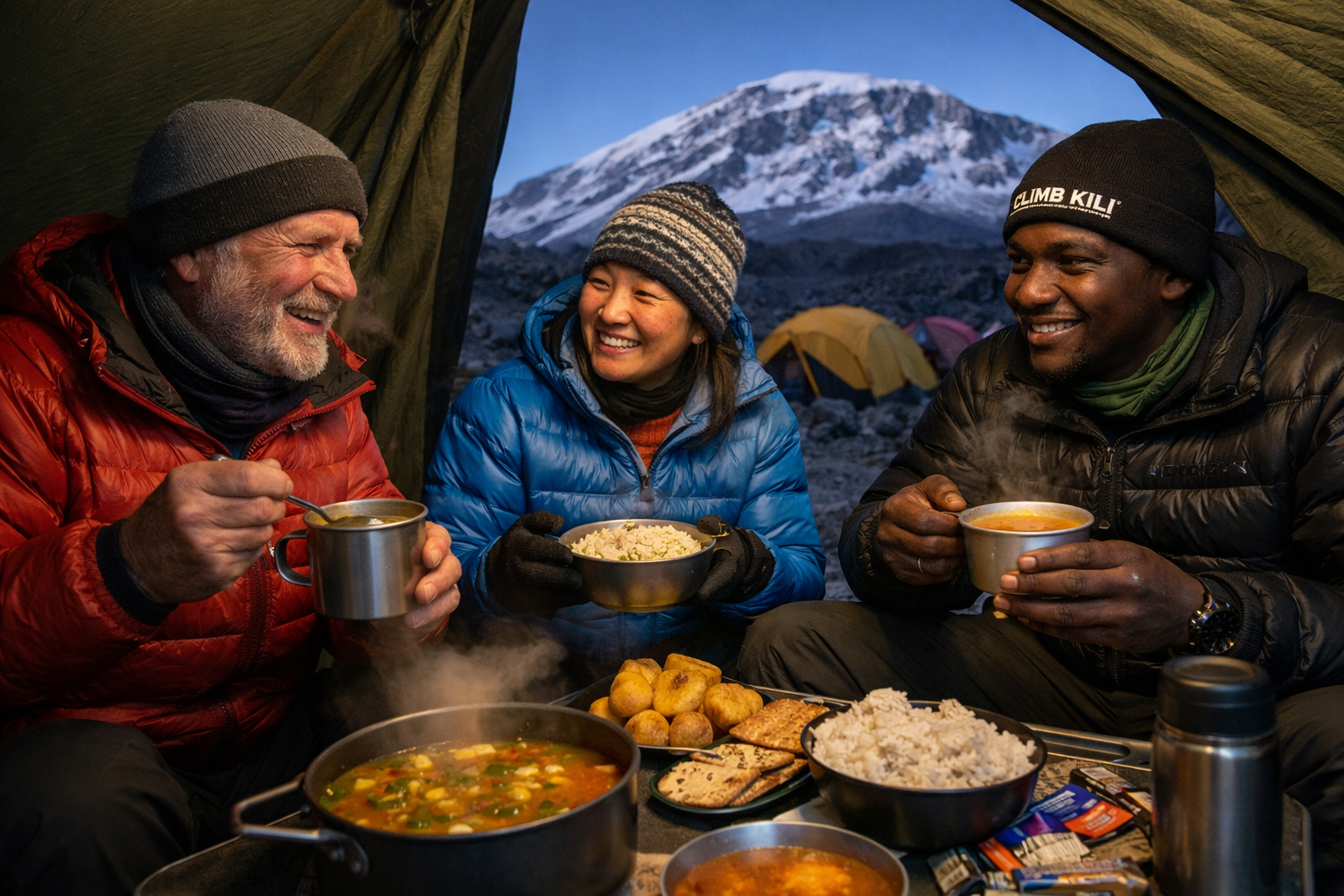
If you’ve climbed above 4,000 meters and suddenly discovered that food feels unappealing, forcing down a meal can feel harder than the hike itself. Many climbers assume this appetite loss is a sign of weakness, poor discipline, or lack of mental toughness.
It isn’t.
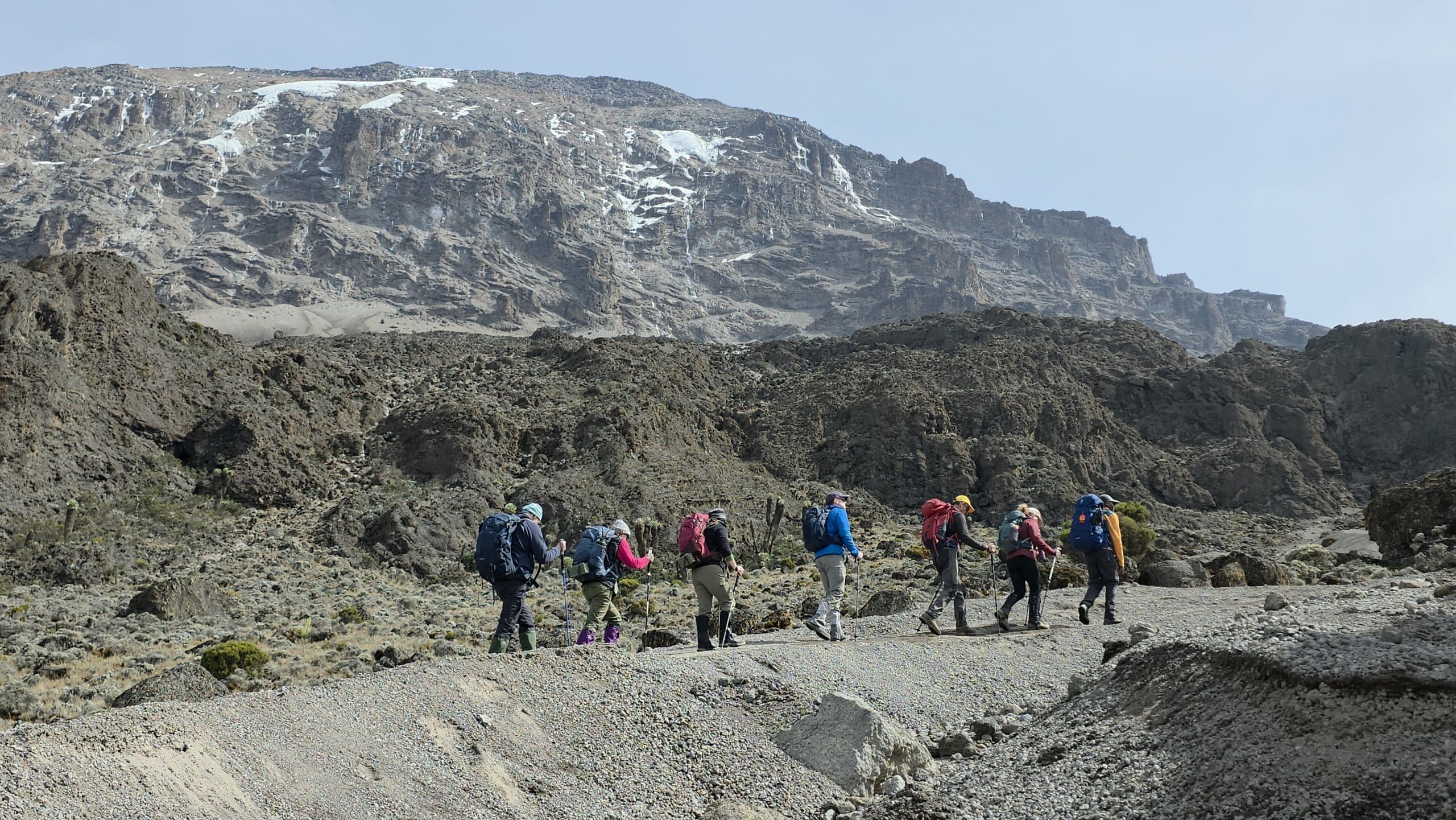
Loss of appetite at altitude is a predictable physiological response to hypoxia and high-altitude metabolic stress. On Kilimanjaro, appetite suppression commonly begins above 4,000 meters—often between Barranco, Karanga, and the high summit camps—exactly where proper fueling matters most.
As oxygen levels decline, the body doesn’t simply work harder. It reorders its priorities for survival. Oxygen delivery, cardiovascular stability, and brain protection take center stage. Digestion moves down the list.
🔬 What Actually Happens Inside Your Body at High Altitude
Everything begins with reduced oxygen availability.
To compensate, the body:
- increases breathing rate
- increases heart rate
- diverts blood to the brain and vital organs
- ramps up red blood cell production
- adjusts hormones that control hunger and metabolism
This redistribution means less blood reaches the gastrointestinal system. Stomach motility slows, digestion becomes less efficient, and normal hunger signals weaken.
Hypoxia also suppresses ghrelin, the hormone responsible for appetite. You stop feeling hungry—even when energy reserves are critically low. At the same time, rapid breathing alters blood pH, contributing to nausea in up to 70% of climbers, according to expedition medicine and high-altitude physiology research.
If food sounds terrible at 4,000–5,000 meters, you’re not imagining it. Your body has simply shifted priorities.
⚡ The Paradox: Your Body Needs More Fuel Than Ever
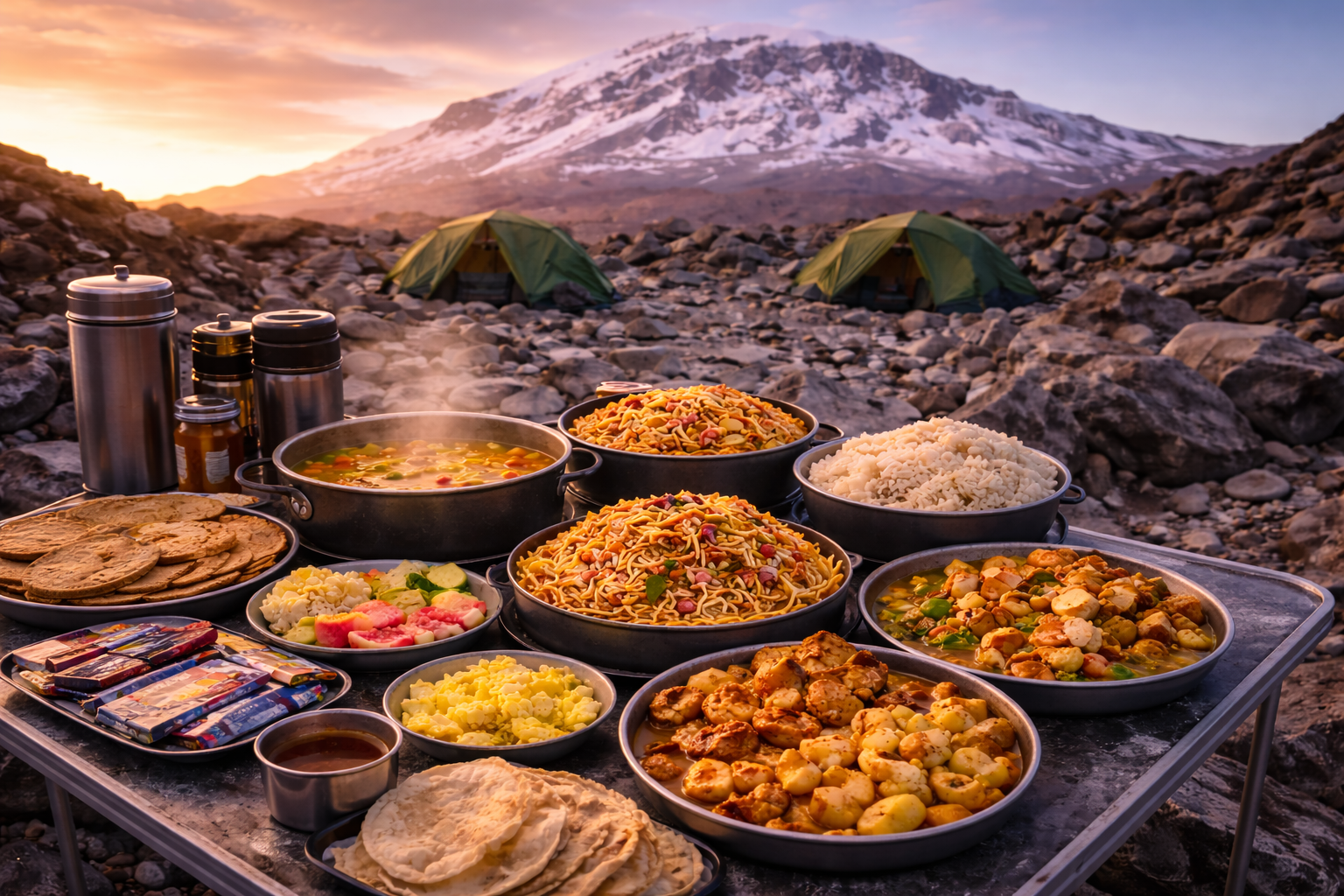
While appetite drops, energy demand increases dramatically.
At altitude:
- metabolic rate rises by 20–30%
- daily caloric needs often reach 3,500–6,000 kcal/day
- dehydration accelerates due to cold, dry air and increased respiration
This caloric deficit affects:
- strength and endurance
- balance and coordination
- judgment and decision-making
- emotional regulation
- overall climbing performance
Left unaddressed, it increases the risk of exhaustion and altitude illness. You may not want food—but your body urgently needs it.
🌡 Appetite Loss Is Part of Acclimatization
Appetite suppression isn’t a flaw. It’s part of acclimatization.
Your body is:
- increasing red blood cell production
- improving oxygen delivery
- adapting breathing patterns
- reallocating energy to vital systems
From a survival standpoint, digestion is optional. From a performance standpoint, fuel is essential.
The goal isn’t to restore normal hunger immediately—it’s to fuel intelligently despite reduced appetite cues.
🥣 What to Eat When Nothing Sounds Good
At high altitude, simple beats perfect.
Your digestive system tolerates food best when it is:
- warm
- easy to digest
- carbohydrate-forward
Carbohydrates require less oxygen to metabolize than fats or protein, making them the most efficient fuel at altitude.
Helpful strategies include:
- eating small amounts every 1–2 hours
- prioritizing rice, oats, potatoes, pasta, crackers
- drinking warm soups and broths to combine calories with hydration
- increasing intake at lower camps where appetite is stronger
- using simple sugars during steep ascents for fast energy
- maintaining aggressive hydration with electrolytes
Hydration is just as critical as calories. Dehydration further suppresses digestion and magnifies fatigue.
✅ High-Altitude Fueling Checklist
✔ eat small amounts frequently
✔ prioritize carbohydrates
✔ drink warm fluids often
✔ fuel more at lower elevations
✔ don’t wait to feel hungry
Small, consistent intake matters more than large meals.
🏔 How Climb Kili Supports Proper Fueling at Altitude
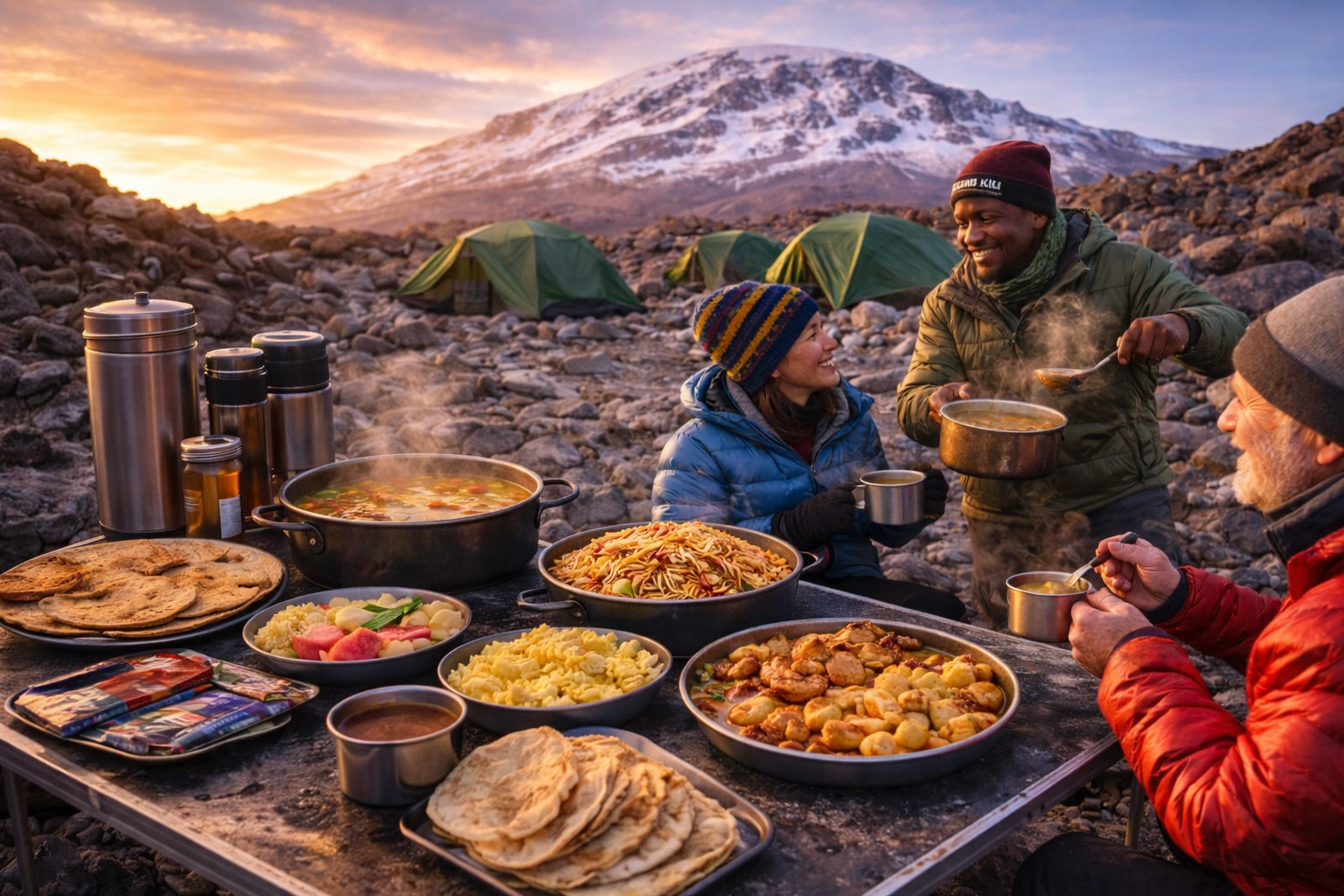
On Kilimanjaro, eating is rarely about appetite—it’s about timing and consistency.
Climb Kili teams focus on:
- warm, carbohydrate-forward meals at higher camps
- soups and broths to support hydration and calorie intake
- frequent snack opportunities instead of large portions
- guide check-ins that monitor appetite changes alongside other altitude symptoms
This approach supports energy, acclimatization, and safe decision-making as climbers move higher on the mountain.
🚨 When Appetite Loss Becomes a Warning Sign
Some appetite loss is normal. However, appetite suppression combined with:
- persistent headache
- nausea or vomiting
- dizziness
- confusion
- extreme fatigue
may signal acute mountain sickness (AMS).
If symptoms escalate, slowing down—or descending—is critical. Appetite loss alone isn’t an emergency, but appetite loss with worsening symptoms should never be ignored.
🏔 The Takeaway for High-Altitude Climbers
If you lose your appetite above 4,000 meters, it isn’t a failure of willpower. It’s your body adapting to a low-oxygen world.
The goal isn’t to feel hungry again.
The goal is to fuel anyway—strategically, gently, and consistently.
Small bites count.
Warm drinks count.
Simple carbohydrates count.
They help you climb stronger, think clearer, and return safely—because the summit is only halfway.