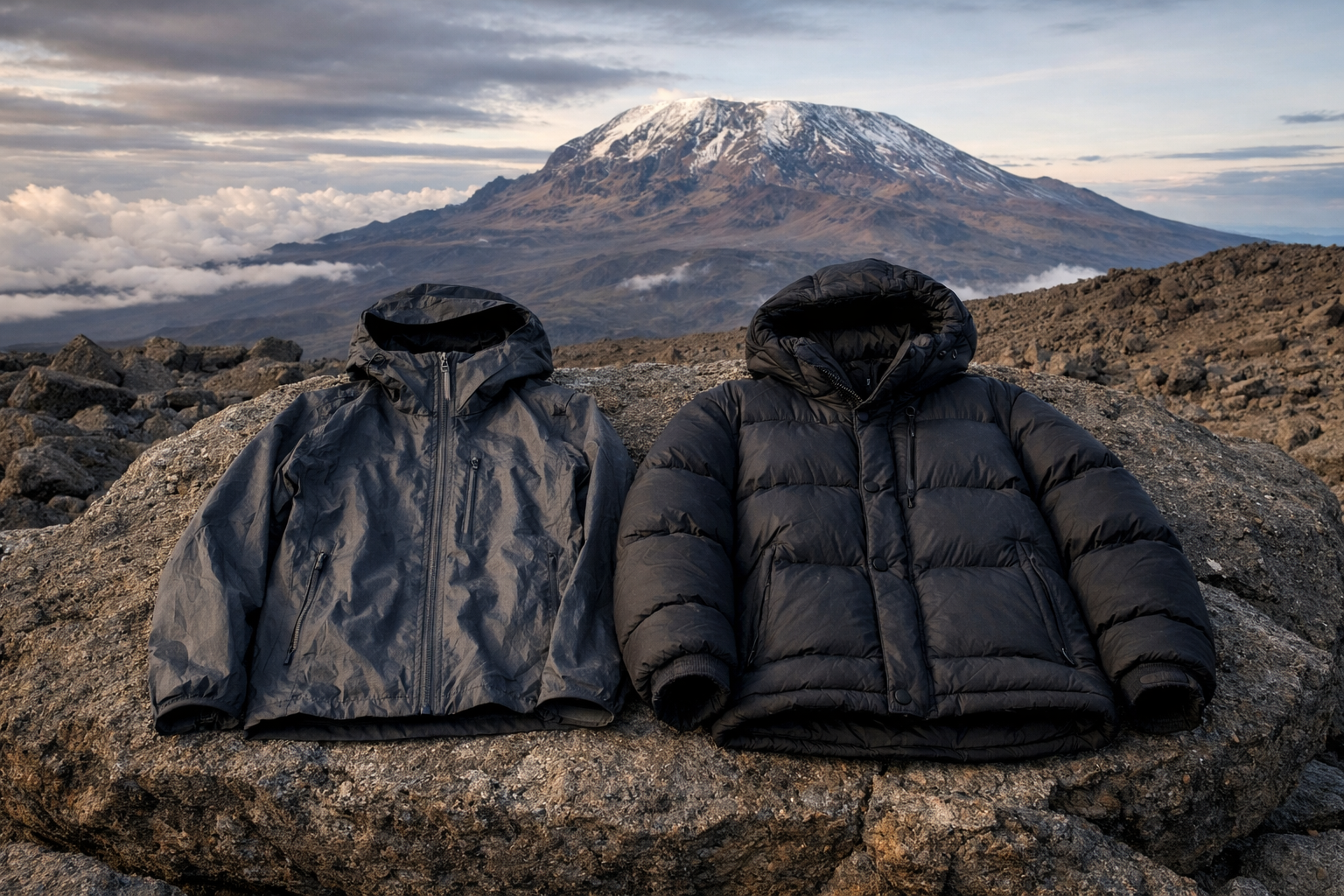
If you’re packing for Kilimanjaro, one of the most common questions climbers ask is:
“Do I really need both a rain jacket and an insulated parka?”
The short answer is yes.
The longer answer explains why this two-jacket system is one of the most important safety and comfort decisions you’ll make on the mountain.
Kilimanjaro isn’t cold all the time — but it is unpredictable. You’ll move through rainforest humidity, dry alpine terrain, strong winds, and freezing summit conditions in a single climb. No single jacket can handle all of that well. That’s why experienced guides require two distinct outer layers, each with a specific role.
Why Kilimanjaro Requires a Jacket System (Not Just One Jacket)
Kilimanjaro is a layering mountain. Conditions change not just day-to-day, but hour-to-hour.
On the same climb you may experience:
- warm, wet hiking in the rainforest
- strong winds above 4,000 meters
- freezing temperatures and snow on summit night
Your body also switches between high output (hiking) and low output (standing still at camp or during breaks). That matters, because jackets designed for movement are very different from jackets designed for warmth.
Instead of one “do-everything” jacket, Kilimanjaro climbers rely on a two-jacket system:
- a hard shell for protection
- an insulated parka for warmth
Each does a job the other cannot.
The Kilimanjaro Jacket System Explained
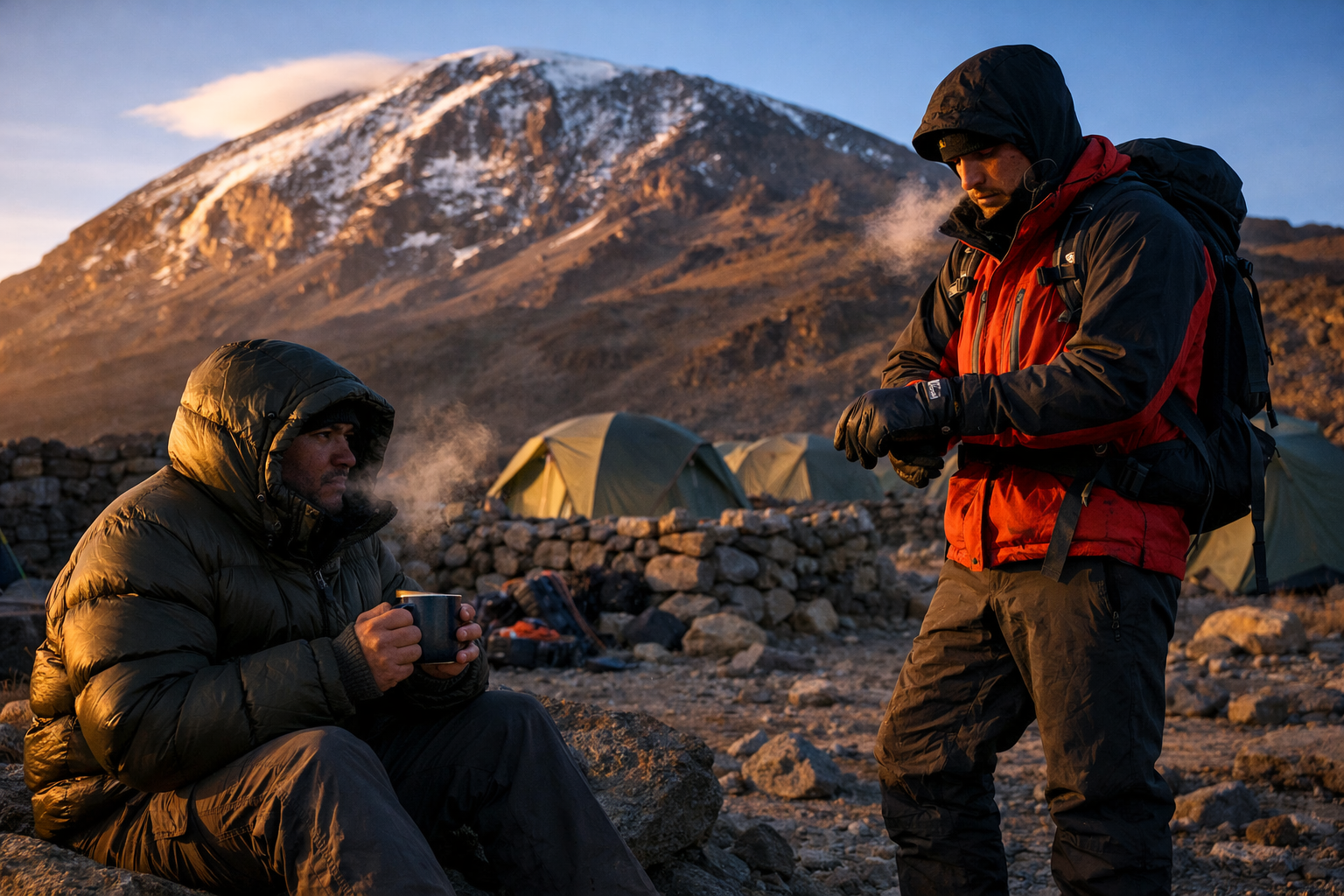
1. Hard Shell Jacket (Outer Protection Layer)
A hard shell jacket is your weather shield.
It protects you from:
- rain in the rainforest
- wind at higher elevations
- snow and spindrift near the summit
This jacket has no insulation. Its job is not to keep you warm it’s to keep you dry and protected while allowing moisture to escape.
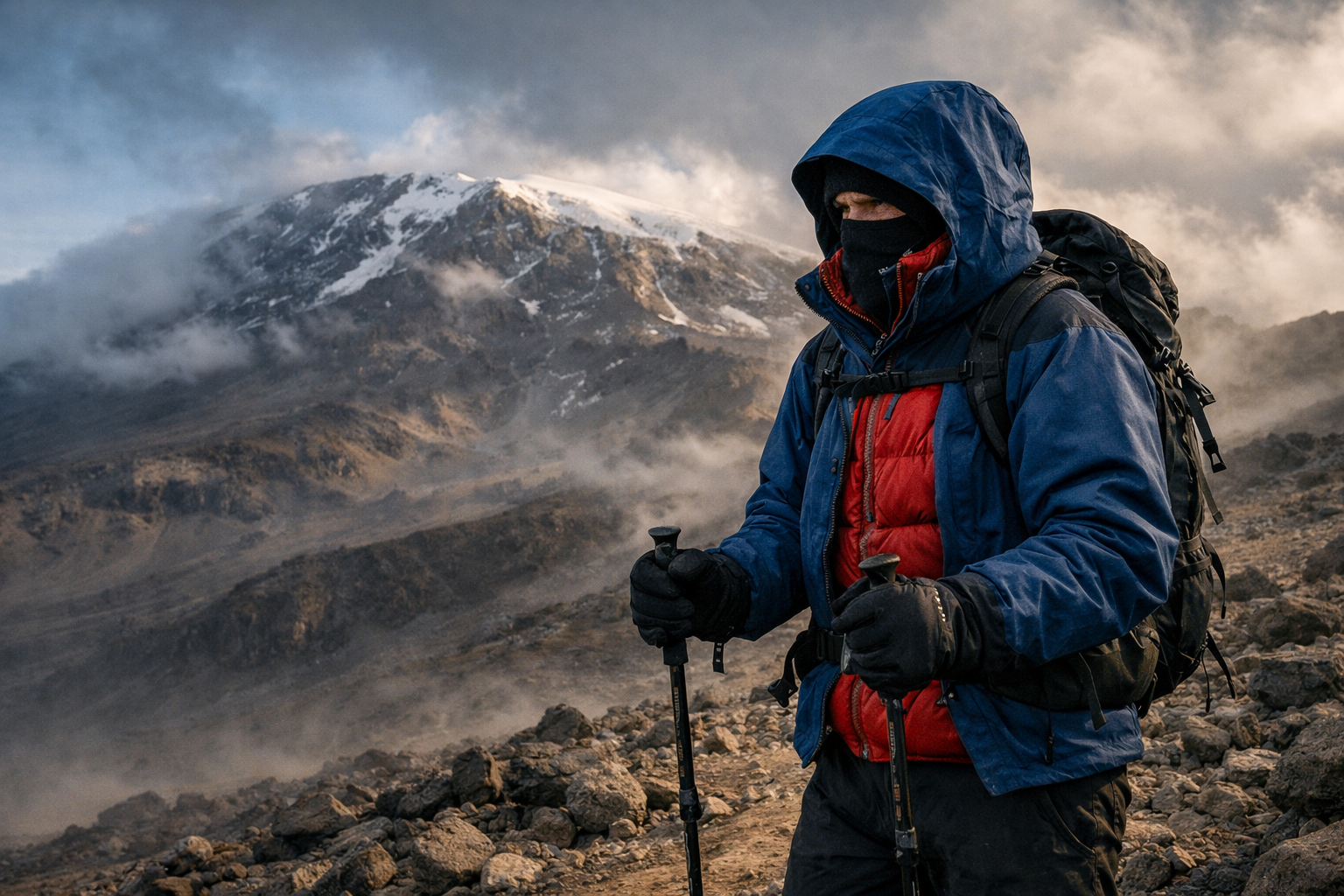
You will wear this jacket while hiking.
Required features:
- fully waterproof (taped or sealed seams)
- windproof
- breathable fabric
- storm hood
- enough room to layer underneath
This jacket becomes especially critical on summit night, where it is worn over your insulated parka to block wind and trap heat.
2. Insulated Parka with Hood (Warmth Layer)
An insulated parka is your heat source.
It is designed to:
- retain warmth in freezing conditions
- keep your core temperature stable
- protect you during rest periods and summit night
This jacket is not worn while hiking. Doing so would cause sweating and rapid heat loss later.
You will wear this jacket at camp and during summit night.
Required features:
- down or synthetic insulation
- hood (non-negotiable)
- high loft for warmth
- compressible for packing
- longer cut for coverage
This is the jacket that keeps climbers comfortable at high camps and prevents dangerous heat loss when movement slows.
Visual Comparison: Hard Shell vs Insulated Parka
| Feature | Hard Shell Jacket | Insulated Parka |
|---|---|---|
| Primary Purpose | Weather protection | Warmth |
| Waterproof | Yes | No |
| Windproof | Yes | Not required |
| Insulation | None | Down or synthetic |
| Breathable | Yes | No |
| Worn While Hiking | Yes | No |
| Worn at Camp | Sometimes | Yes |
| Summit Night Use | Outer layer | Inner warmth layer |
| Required on Kilimanjaro | Yes | Yes |
How These Jackets Work Together on the Mountain
The key is layering, not choosing one over the other.
- While hiking:
base layers + mid-layers + hard shell if needed - At camp:
base layers + mid-layers + insulated parka - Summit night:
base layers + fleece + insulated parka + hard shell on top
This system allows climbers to:
- regulate body temperature
- stay dry without overheating
- preserve energy
- reduce risk of cold-related fatigue and illness
Kilimanjaro Jacket Recommendations (Guide-Approved)
Hard Shell Jacket (Waterproof Outer Layer)
| Category | Details |
|---|---|
| Purpose | Waterproof, windproof, breathable outer shell |
| Used For | Rainforest rain, alpine wind, snow, summit day |
| Worn While Hiking | ✅ Yes |
| Insulation | ❌ None |
| Required Features | Taped seams, storm hood, durable fabric, room to layer |
| Guide Requirement | Non-negotiable for Kilimanjaro |
Climb Kili–Approved Picks
Insulated Parka with Hood (Warmth Layer)
| Category | Details |
|---|---|
| Purpose | Maximum warmth in freezing conditions |
| Used For | Summit night, cold camps, rest stops |
| Worn While Hiking | ❌ No |
| Insulation | ✅ Down or synthetic |
| Required Features | Hood, high loft insulation, compressible, longer cut |
| Guide Requirement | Essential for summit success and safety |
Climb Kili–Approved Picks
| Men | Women |
|---|---|
| Pioneer Camp Men’s Insulated Jacket | Weatherproof Women’s Puffer Jackets |
| Outdoor Ventures Men’s Insulated Jacket | Columbia Women’s Powder Lite |
| — | Montane Women’s Anti-Freeze XT |
FAQ: “Do I Really Need Both?”
Yes and here’s why.
A rain jacket cannot replace an insulated parka.
An insulated parka cannot replace a rain jacket.
Trying to use one jacket for both jobs leads to:
- sweating while hiking
- getting wet in rain
- freezing when you stop moving
- rapid heat loss at altitude
Guides see this mistake every season and it’s one of the most common causes of discomfort and cold on Kilimanjaro.
A two-jacket system isn’t about luxury.
It’s about safety, efficiency, and summit comfort.
Common Jacket Mistakes We See on Kilimanjaro
- insulated rain jackets used as a single solution
- ski jackets that aren’t breathable
- fashion rain jackets without seam sealing
- ponchos or emergency shells
- jackets that don’t fit over layers
If a jacket can’t layer properly or handle both wind and moisture, it doesn’t belong on Kilimanjaro.
Bottom Line
Yes! you need both jackets.
Not because Kilimanjaro is extreme every day, but because it demands flexibility. Conditions change quickly, and the climbers who stay warm, dry, and steady are the ones who are properly layered.
The hard shell protects you from the mountain.
The insulated parka protects you from the cold.
Together, they form one of the most important systems in your Kilimanjaro packing list.