
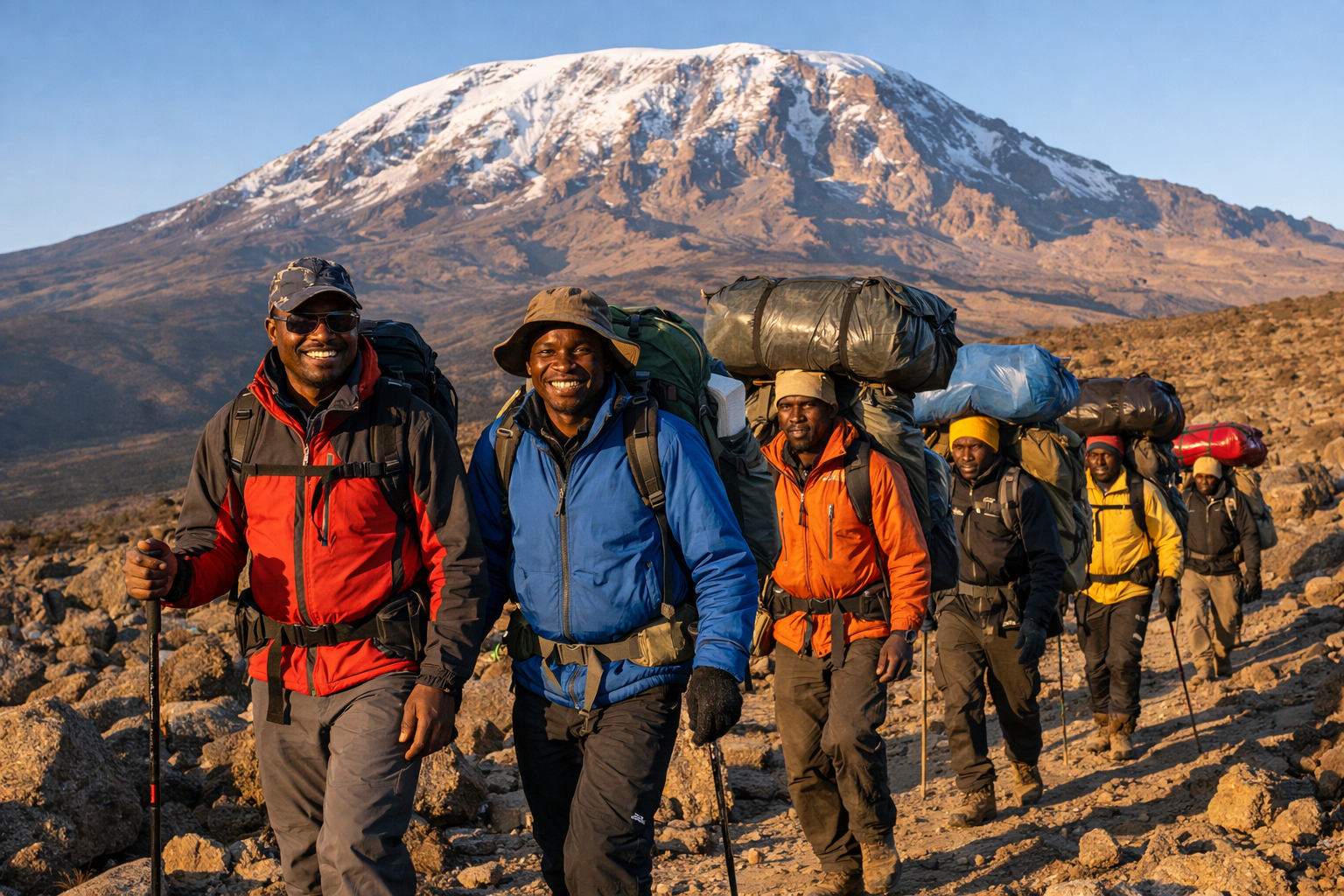
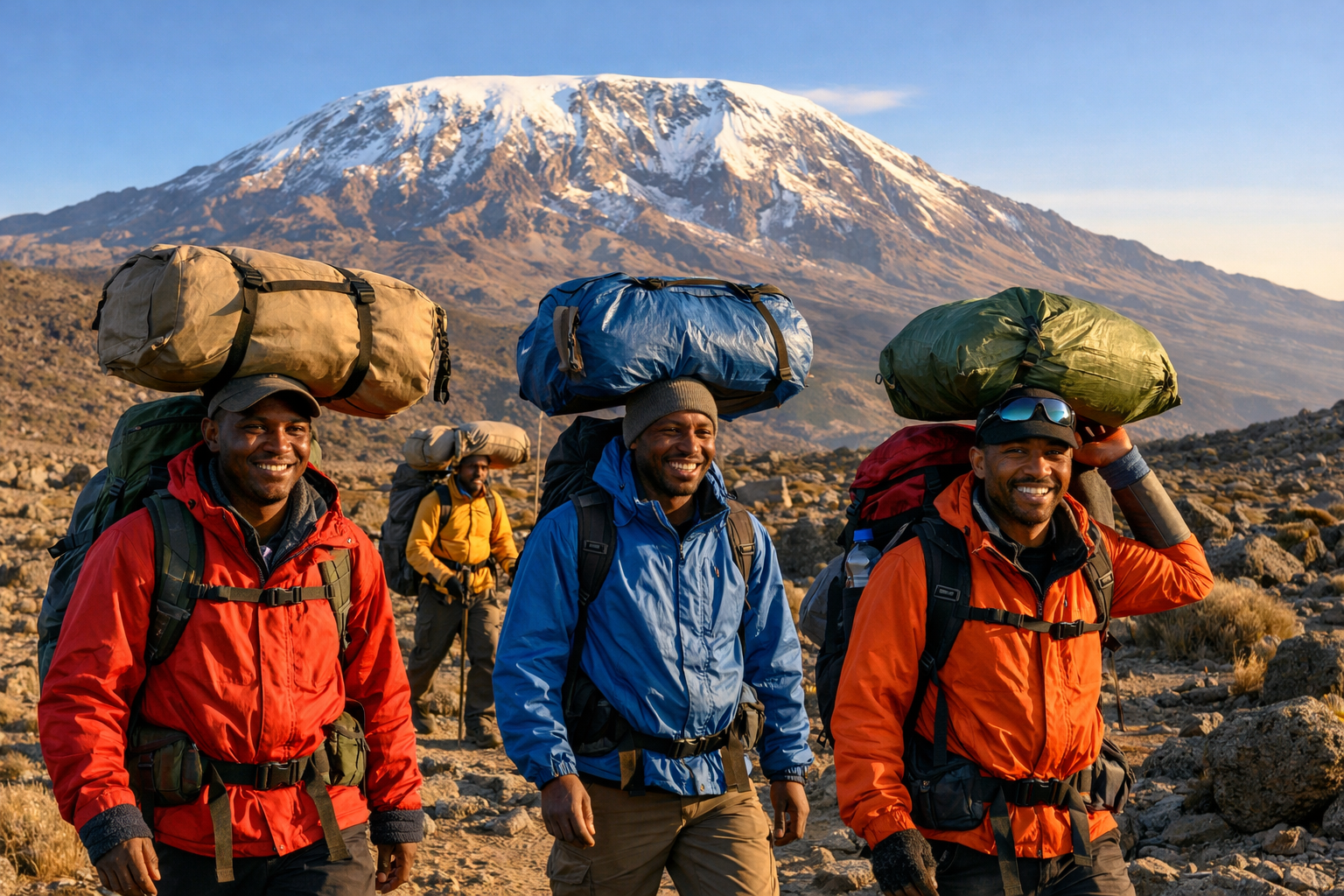
When you stand on the summit of Kilimanjaro, you’re not alone. In fact, behind every successful climb is a team of porters who carried tents, food, water, and equipment through rainforest, alpine desert, and glacier terrain.
Ultimately, how they are treated matters.
If you’re comparing KPAP vs non-KPAP Kilimanjaro operators, this guide also explains what the difference means — not just ethically, but structurally, professionally, and for your own summit success.
What Is KPAP?
Specifically, KPAP stands for Kilimanjaro Porters Assistance Project — an independent organization that monitors and promotes fair labor practices for mountain porters.
In particular, KPAP works to ensure that porters:
- Receive fair wages
- Carry safe load limits
- Are provided proper meals
- Have adequate shelter and equipment
- Are treated with dignity and respect
- Operate under independent oversight
Importantly, KPAP member companies are subject to surprise monitoring checks.
Why Porter Welfare Matters to You as a Climber
In fact, porter welfare directly affects your expedition quality.
For example, better treated porters create stronger morale. In turn, stronger morale leads to smoother logistics. Consequently, smoother logistics produce safer operations. As a result, safer operations drive higher summit success.
Therefore, ethics and safety are connected.
As a result, climbs organized under strong ethical standards typically also demonstrate better medical infrastructure, pacing strategy, and expedition professionalism.
KPAP vs Non-KPAP: What’s the Difference?
| Standard | KPAP Operator | Non-KPAP Operator |
|---|---|---|
| Independent Monitoring | Yes | No |
| Enforced Load Limits | Yes | Not guaranteed |
| Wage Transparency | Verified | Varies |
| Meal & Shelter Standards | Monitored | Inconsistent |
| Ethical Accountability | High | Variable |
However, not every non-KPAP operator is unethical — but without independent monitoring, standards are therefore not externally verified.
Ultimately, that uncertainty is the risk.
How to Choose an Ethical Kilimanjaro Operator
Therefore, if you want to climb responsibly in 2026, ask:
- Is the company KPAP verified?
- Do they clearly state porter load limits?
- In addition, can you verify wage transparency?
- Does the operator discuss ethical practices openly?
- Are safety and itinerary length aligned with responsible climbing?
You can also compare broader operator standards here:
Best Kilimanjaro Tour Company Guide
Ethical Structure and Safety Infrastructure Go Together
Similarly, companies that invest in ethical oversight often also invest in:
- 7–8 day acclimatization itineraries
- Small group sizes (6 climbers max)
- Twice-daily health checks
- Emergency oxygen on every climb
Learn more about medical standards here:
https://climbkili.com/climb-kilimanjaro-safely
Furthermore, route design also plays a major role in safe climbing:
🚩 Red Flags to Watch For
In particular, be cautious if you notice:
- Extremely low pricing without breakdown
- No mention of KPAP or porter standards
- 5–6 day itineraries marketed aggressively
- Large group sizes
- Vague summit success claims
In contrast, responsible operators are transparent about both safety and ethics.
📊 Industry Context
For context, Kilimanjaro employs thousands of porters each year. For example, historically issues such as overloading and inconsistent wages were common before monitoring organizations became more active.
As a result, modern climbers increasingly demand responsible tourism and Consequently, KPAP has become a key benchmark for ethical Kilimanjaro operators.
Therefore, in 2026, ethical climbing is no longer optional. In fact, it’s expected.
Ethical Operator Checklist
✔ KPAP verified
✔ 7–8 day itinerary
✔ Small group cap
✔ Emergency oxygen included
✔ Transparent pricing
✔ Clear porter load policies
If an operator checks these boxes, you’re likely looking at a structurally responsible expedition.
Why Many Climbers Choose Climb Kili
Specifically, Climb Kili operates under KPAP verification and integrates ethics into every expedition.
Specifically, this includes:
- Fair porter wages and monitored load limits
- Proper meals and shelter standards
- Maximum six climbers per group
- 7–8 day itineraries only
- Twice-daily health checks
- Emergency oxygen on every climb
- U.S. and Tanzania-based support teams
Ultimately, ethical standards and safety standards are inseparable.
Ultimately, choosing between KPAP and non-KPAP Kilimanjaro operators is about more than compliance.
First, it’s about accountability. Second, it’s about professionalism. Above all, it’s about protecting every member of the mountain team.
When selecting your Kilimanjaro tour company in 2026, specifically look beyond price and summit promises.
Instead, choose integrity.
After all, how you climb matters just as much as reaching Uhuru Peak.
Tutaonana juu ya mlima (See you on the mountain