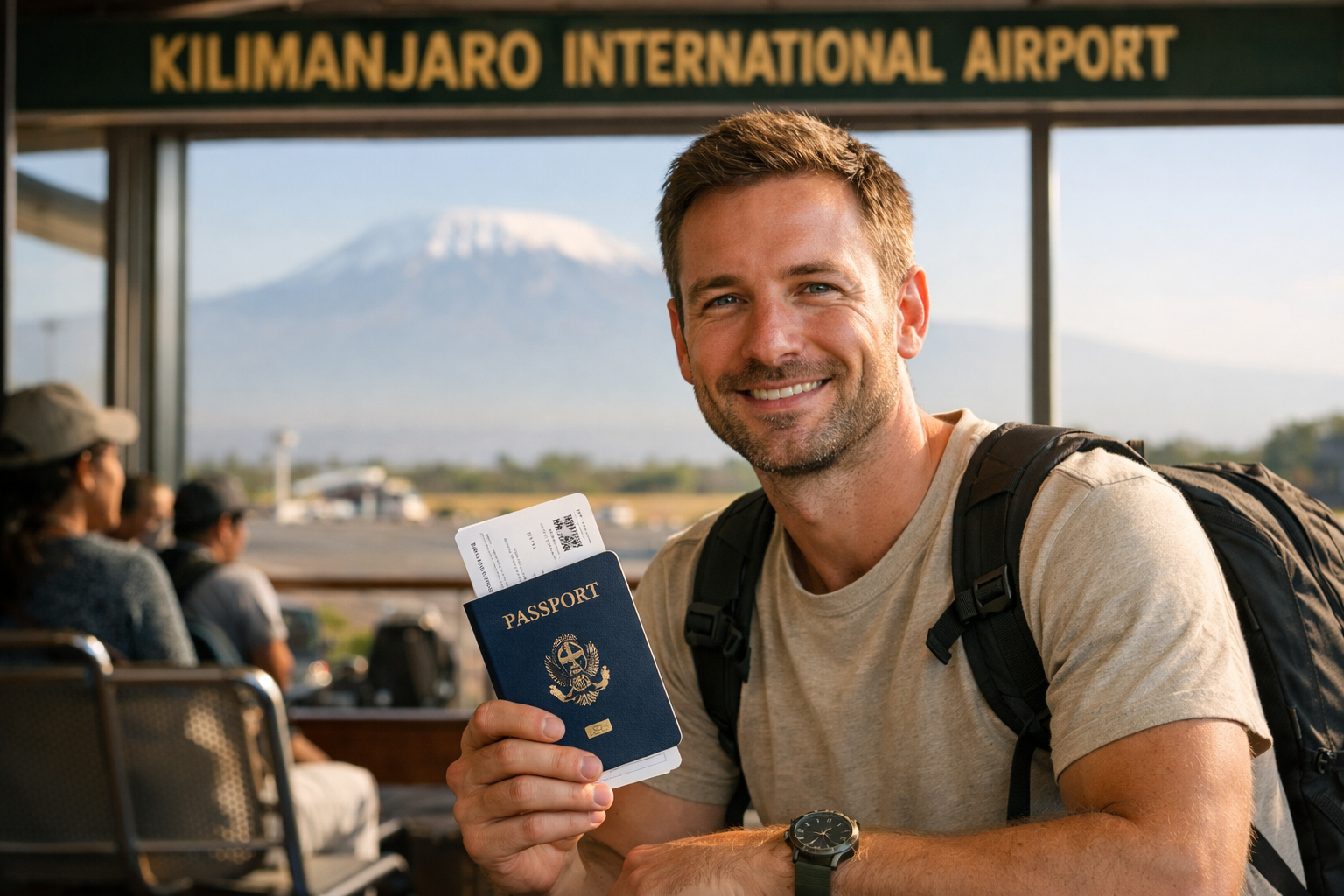
Climbing Mount Kilimanjaro starts long before you step onto the trail. Understanding Tanzania’s visa rules, passport validity requirements, health recommendations, and airport logistics will ensure a smooth arrival for your 2026 climb.
Do I Need a Visa to Climb Kilimanjaro?
Yes — most travelers require a Tanzania tourist visa.
- U.S. citizens: $100 USD (multi-entry)
- Most other nationalities (UK, Canada, Australia, EU): $50 USD
Always verify through the official Tanzania Immigration website before departure, as regulations can change.
1. Tanzania Visa Requirements
Visa Options
- eVisa (Recommended) – Apply online before travel (2–4 weeks in advance)
- Visa on Arrival – Available for many nationalities at JRO
Bring:
- Printed eVisa approval (if applicable)
- Passport valid 6+ months
- Crisp USD bills (post-2009)
Apply early to avoid delays.
Visa Requirements by Nationality (2026)
- United States – $100 visa
- United Kingdom – $50 visa
- Canada – $50 visa
- Australia – $50 visa
- European Union – $50 visa
Always double-check before travel.
2. Passport Validity Rules
To enter Tanzania:
- Passport must be valid for at least 6 months beyond arrival
- At least one blank visa page required
Airlines may deny boarding if requirements are not met.
3. Vaccinations & Health Considerations
Recommended Vaccines
- Routine vaccines (MMR, Tetanus)
- Hepatitis A
- Typhoid
- yellow fever risk country
Consult a travel clinic 6–8 weeks before departure.
Malaria Clarification
- No malaria risk at Kilimanjaro summit altitude
- Lower elevations (Arusha, safari parks) may require precautions
Consult your physician regarding prevention options.
4. Travel Insurance (Essential)
Your policy should include:
- High-altitude trekking coverage (up to 6,000m)
- Emergency evacuation
- Medical expenses abroad
- Trip cancellation/interruption
Altitude risks are unpredictable — evacuation coverage is critical.
5. Step-by-Step Arrival at Kilimanjaro Airport (JRO)
- Deplane
- Visa desk (if needed)
- Immigration stamp
- Luggage claim
- Customs
- Meet your driver outside arrivals
Airport guide → https://climbkili.com/climb-kili-blog/kilimanjaro-international-airport-arrival-guide/
Pre-arranged transfers simplify arrival.
6. Currency & Entry Tips
- Bring crisp USD bills (post-2009)
- Credit cards not always accepted for visa
- Keep small bills for tips
- ATM access available in Arusha and Moshi
7. Packing & Documentation Checklist
Before departure confirm:
- Passport (6+ months validity)
- Visa approval or payment funds
- Travel insurance documents
- Flight itinerary
- Hotel/expedition confirmation
8. Safari Extensions & Domestic Flights
If combining your climb with safari:
- Domestic flights operate from Arusha Airport
- Light aircraft luggage limit ~15kg (soft bags only)
- Schedule one recovery night after descent before safari
Travel Mistakes That Delay Climbs
- Expired passport
- No high-altitude insurance coverage
- Arriving same day as climb briefing
- Missing small USD bills for visa
- Waiting too long to apply for eVisa
Preparation prevents stress.
Final Thoughts
Once your paperwork is handled, Kilimanjaro becomes what it should be — an adventure, not an administrative headache.
Early preparation ensures your journey begins smoothly and confidently.
Tutaonana juu ya mlima (See you on the mountain) 💚🏔️