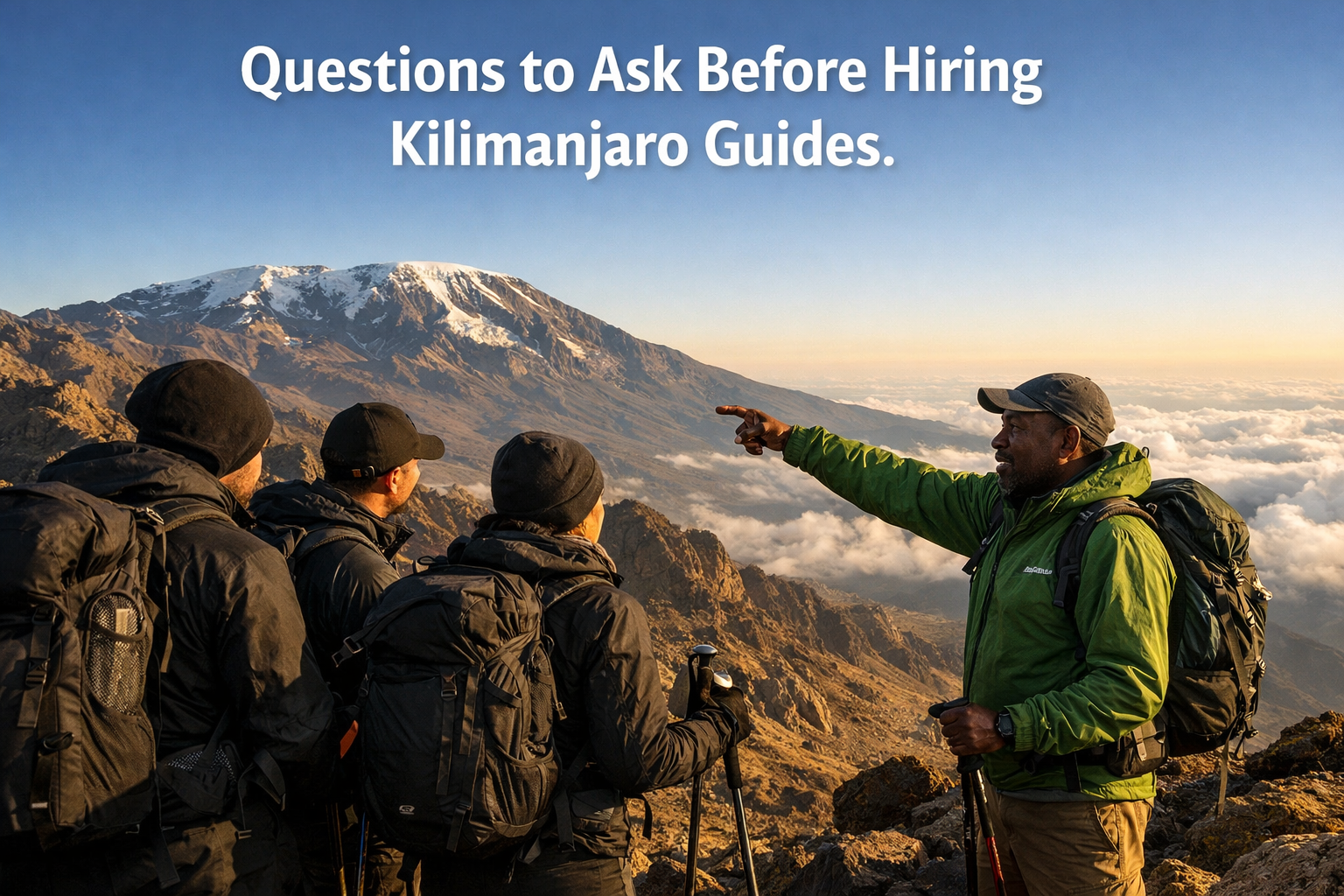
At 19,341 feet (5,895 meters), the person guiding you up Mount Kilimanjaro plays a critical role in your safety, acclimatization, and summit success. While route choice and training matter, the experience and judgment of your Kilimanjaro guide team can make the biggest difference on the mountain.
Before booking your climb, asking the right questions will help you understand whether a guiding company prioritizes safety, professionalism, and ethical practices.
Below are some of the most important questions to ask when evaluating Kilimanjaro guides.
1. What Certifications Do Your Guides Hold?
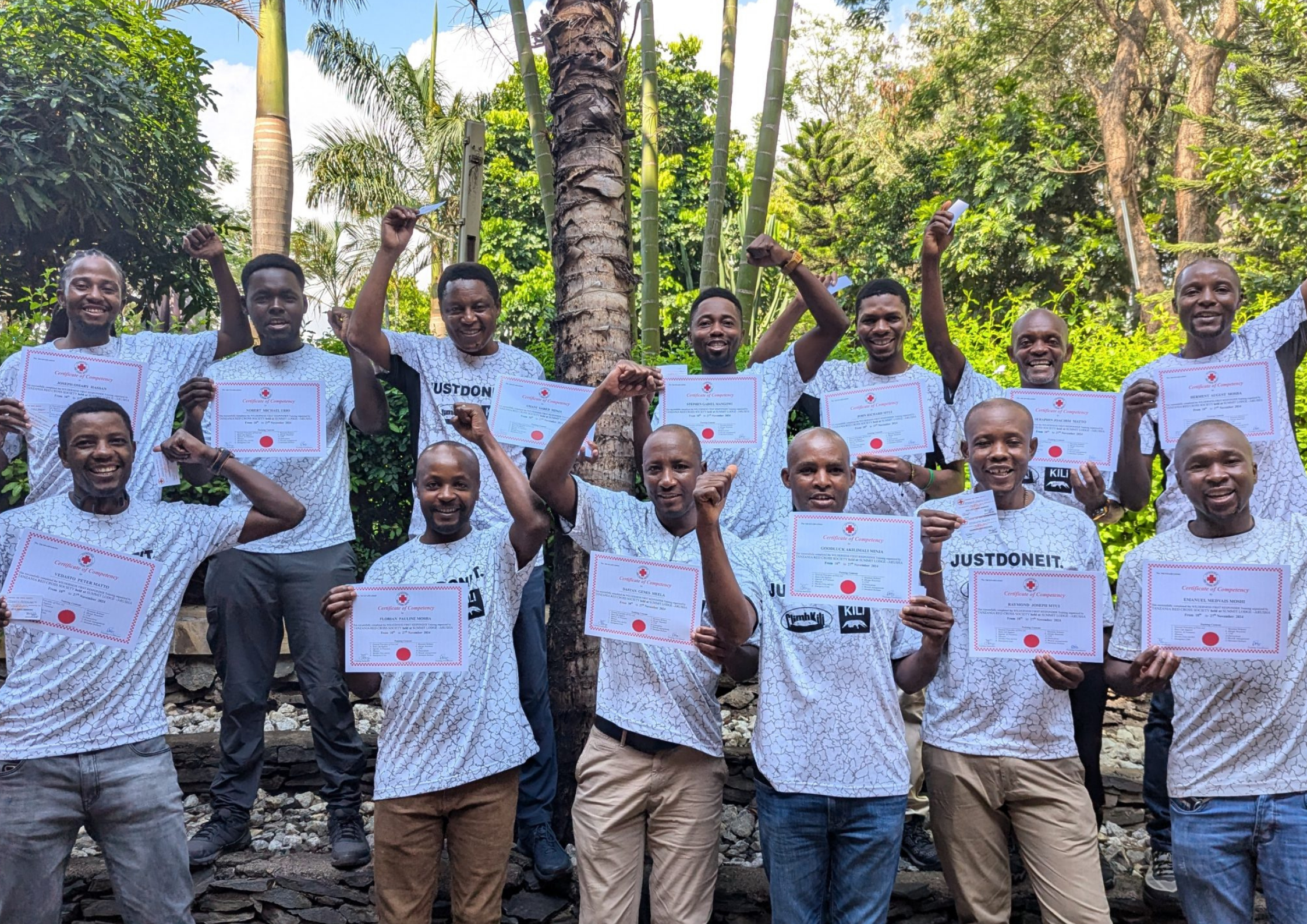
Professional Kilimanjaro guides should have training such as:
- Wilderness First Responder (WFR)
- High‑altitude illness recognition
- Emergency response training
- Tanzania National Parks (TANAPA) registration
These certifications ensure guides can properly respond to altitude sickness and emergencies.
2. What Is Your Guide‑to‑Climber Ratio?
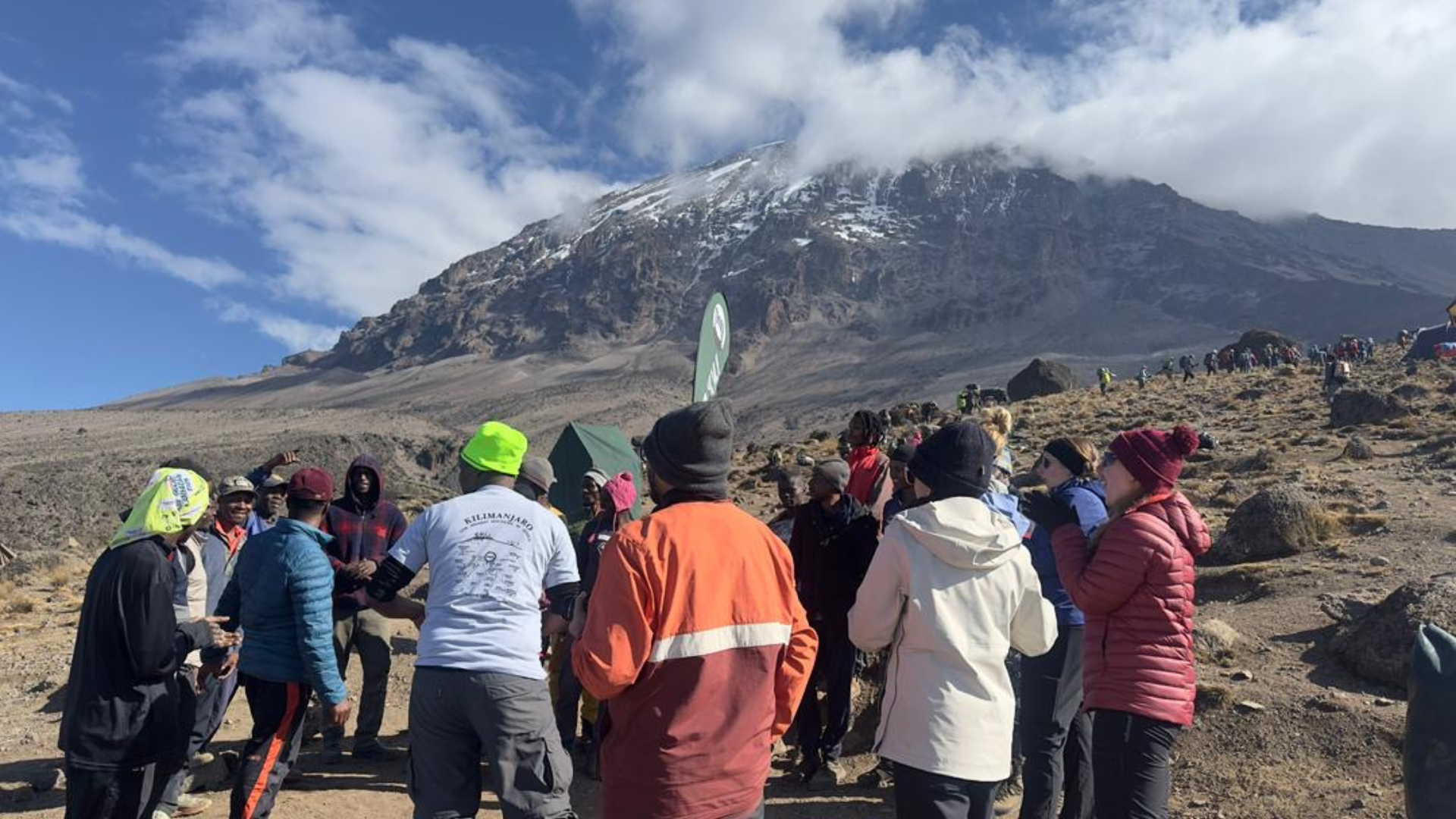
A strong guide structure typically includes:
- 1 guide for every 2–3 climbers
- Additional assistant guides for summit night
Smaller ratios allow closer health monitoring and safer pacing.
3. Do Guides Carry Emergency Oxygen?

Emergency oxygen should be standard on every Kilimanjaro expedition. Guides should also carry pulse oximeters to monitor oxygen saturation levels during the climb.
Learn more about altitude safety → https://climbkili.com/kilimanjaro-safety-guide
4. How Do You Monitor Altitude Sickness?
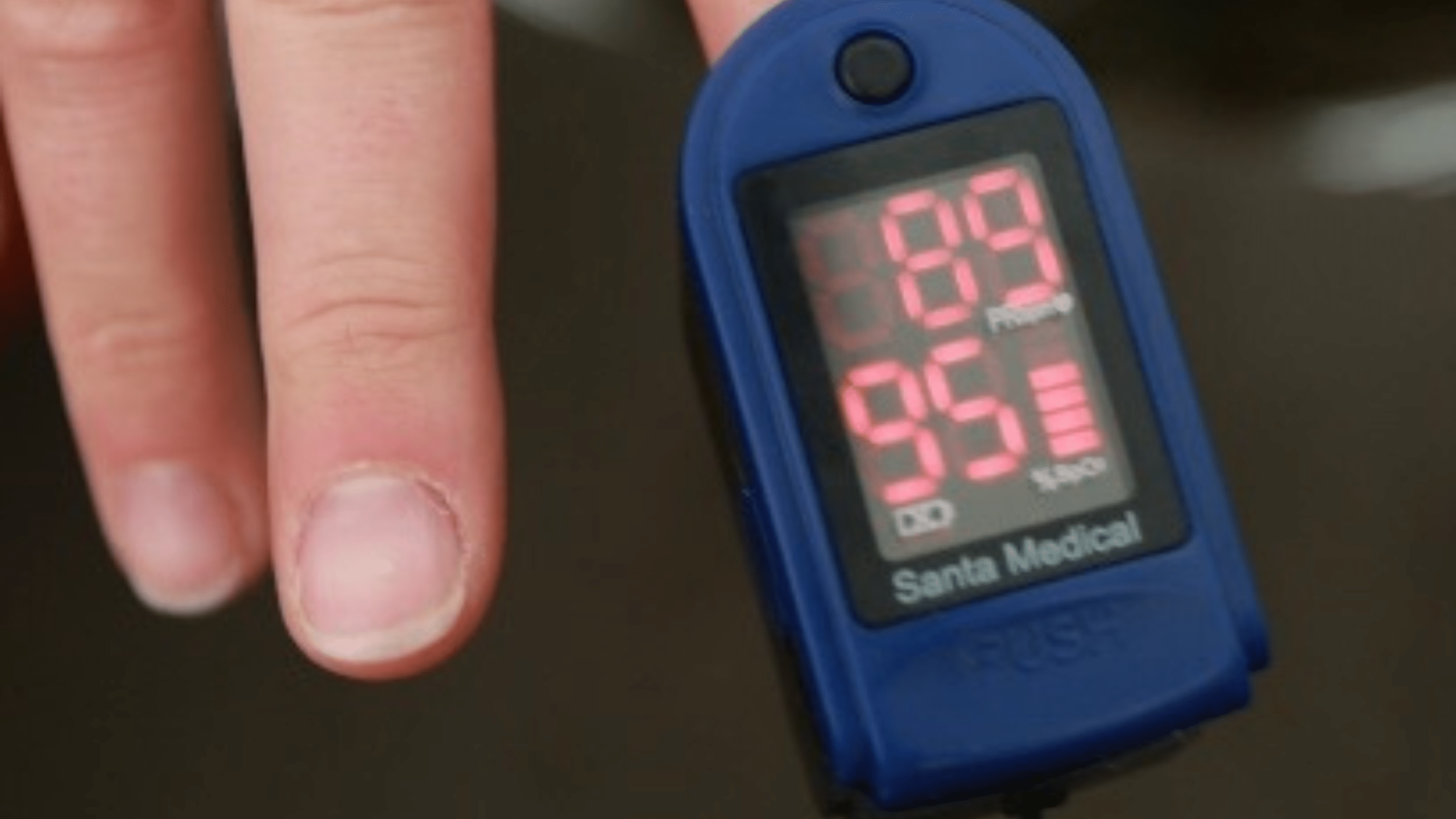
Ask about the daily health monitoring process. Responsible guide teams typically conduct:
- Twice‑daily health checks
- Pulse oximeter readings
- Symptom evaluations
These systems help identify altitude sickness early.
5. What Is Your Summit Success Rate?

Summit success rates should be based on 7‑ or 8‑day itineraries, which allow proper acclimatization. If a company advertises very high success rates on short itineraries, ask how those numbers are calculated.
6. Which Routes Do Your Guides Have Experience On?

Experienced guides should regularly lead climbs on major routes such as:
- Lemosho Route
- Machame Route
7. What Happens If Someone Gets Altitude Sickness?
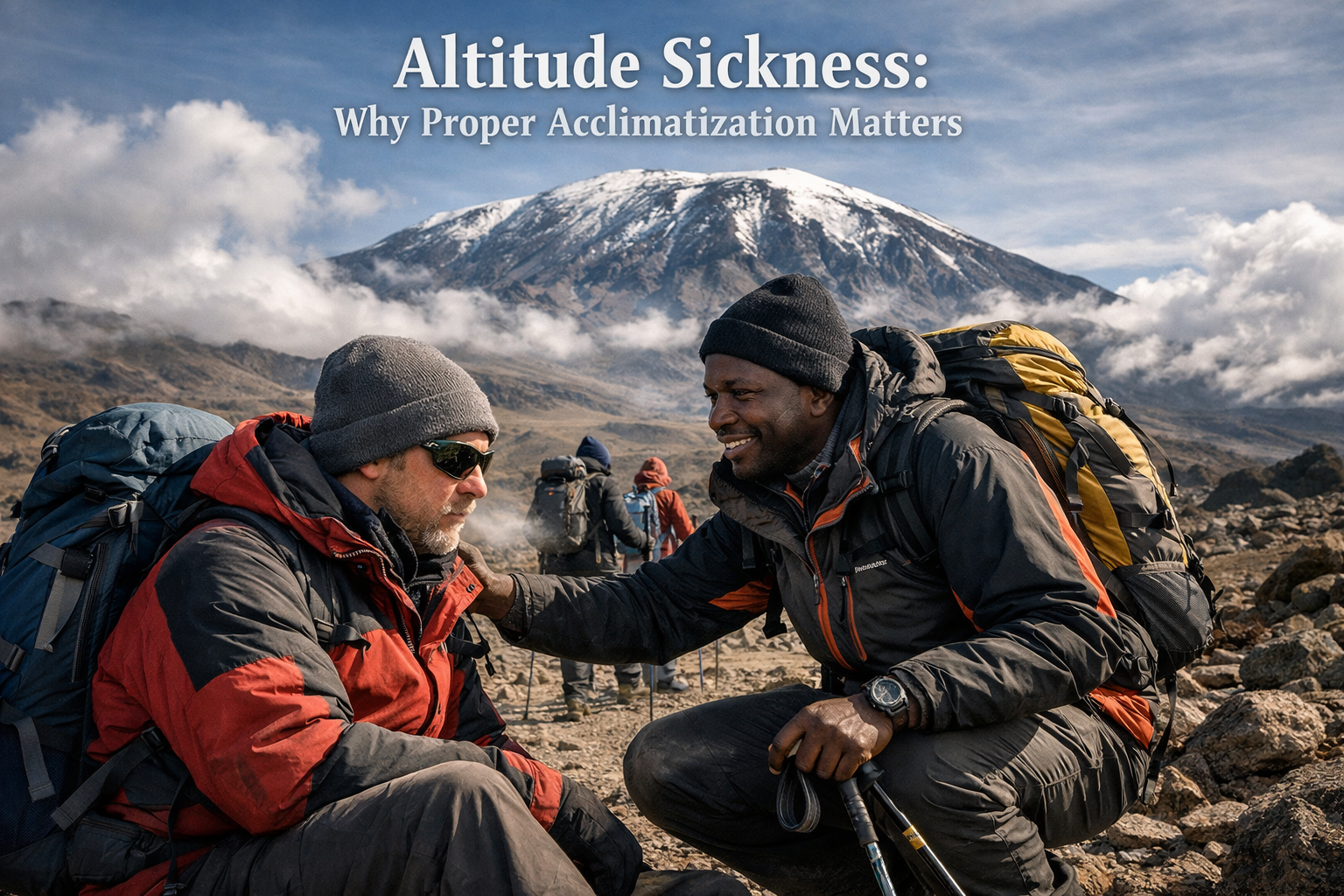
A professional guide team should clearly explain their protocol. Typically this includes:
- Immediate health assessment
- Oxygen administration if needed
- Descent if symptoms worsen
Descent is the most effective treatment for altitude sickness.
8. Are Your Operations KPAP‑Verified?
KPAP (Kilimanjaro Porters Assistance Project) ensures fair treatment of porters and ethical expedition standards.
Learn more → https://climbkili.com/kpap-vs-non-kpap-kilimanjaro-guide
9. How Large Are Your Groups?

Large groups can reduce guide attention and increase risk. Many premium operators limit groups to around 6 climbers per expedition to maintain safety and personalized support.
10. Who Makes the Final Summit Decision?

Professional Kilimanjaro guides prioritize safety above summit pressure. The lead guide should have full authority to turn climbers around if conditions or health require it.
Red Flags When Hiring Kilimanjaro Guides

Be cautious if:
- Certifications are unclear
- Emergency oxygen is not mentioned
- Group sizes are very large
- Safety protocols are vague
Transparency and professionalism are key indicators of a strong guiding team.
How Climb Kili Structures Its Guide Teams

Climb Kili organizes expeditions with:
- Small groups (maximum 6 climbers)
- Experienced guides who progressed from porter to lead guide
- Twice‑daily health monitoring
- Emergency oxygen on every climb
- Ethical practices aligned with KPAP standards
This structure helps ensure a safer and more supportive Kilimanjaro experience.
Final Thoughts
Choosing Kilimanjaro guides isn’t just about finding someone to lead the way. It’s about selecting a team that prioritizes safety, experience, and responsible decision‑making.
Asking the right questions before booking can help you climb with confidence and focus on the adventure ahead.
Tutaonana juu ya mlima (See you on the mountain) 💚🏔️