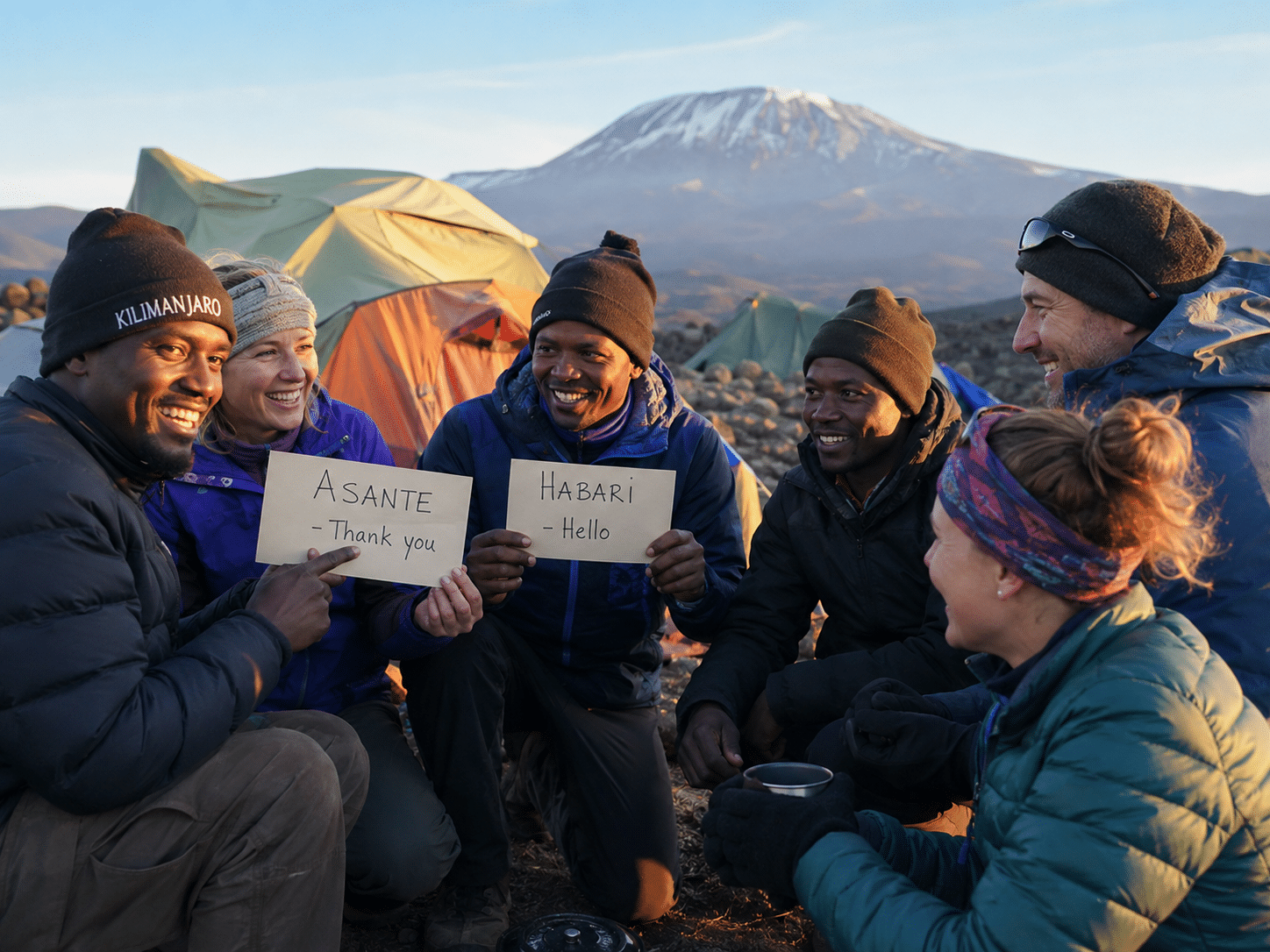
Climbing Mount Kilimanjaro is about more than reaching the summit of Africa. It’s also about experiencing the culture, warmth, and spirit of Tanzania and one of the best ways to connect with your guides, porters, and mountain crew is by learning a few simple Swahili phrases before your trek begins.
You do not need to speak fluent Swahili to climb Kilimanjaro. Most guides speak English, and the crew is incredibly welcoming and supportive. But even learning a handful of words can create instant connection, bring smiles to camp, and make your experience feel even more meaningful.
Many climbers arrive in Tanzania nervous about altitude and summit night. By the end of the trek, they often find themselves singing Swahili songs with the crew, laughing around the dinner tent, and shouting “Asante Sana!” at the summit.
What Language Is Spoken on Kilimanjaro?
Swahili is the national language of Tanzania and is spoken throughout the country, including on Kilimanjaro. English is also widely spoken by guides and tourism staff, especially on trekking routes.
Most mountain crews speak both Swahili and English, and many guides also speak additional local languages. Even though English communication is common, making an effort to use Swahili is deeply appreciated and often becomes one of the most memorable parts of the experience.
Quick Swahili Cheat Sheet for Kilimanjaro Climbers
| Swahili | Pronunciation | English Meaning |
|---|---|---|
| Jambo | JAHM-bo | Hello |
| Pole Pole | PO-leh PO-leh | Slowly Slowly |
| Asante Sana | ah-SAHN-teh SAH-nah | Thank You Very Much |
| Maji | MAH-jee | Water |
| Chakula | cha-KOO-la | Food |
| Twende | TWEN-deh | Let’s Go |
| Hakuna Matata | hah-KOO-nah mah-TAH-tah | No Worries |
| Rafiki | rah-FEE-kee | Friend |
| Karibu | kah-REE-boo | Welcome |
| Kidogo Kidogo | kee-DOH-go kee-DOH-go | Little by Little |
Many climbers save this list to their phones before the trek begins.
Why Learning Swahili Makes the Experience Better
Learning a few Swahili phrases helps climbers feel more connected to the people who make the Kilimanjaro experience so special.
Your guides, cooks, and porters work incredibly hard throughout the expedition. A simple “Asante Sana” can instantly create warmth and appreciation.
Swahili also becomes part of the rhythm of the mountain:
- greetings in the morning
- encouragement on difficult trail sections
- songs in camp
- celebration dances after summit success
For many trekkers, these moments become just as meaningful as reaching Uhuru Peak itself.
Words You’ll Hear Every Day on Kilimanjaro
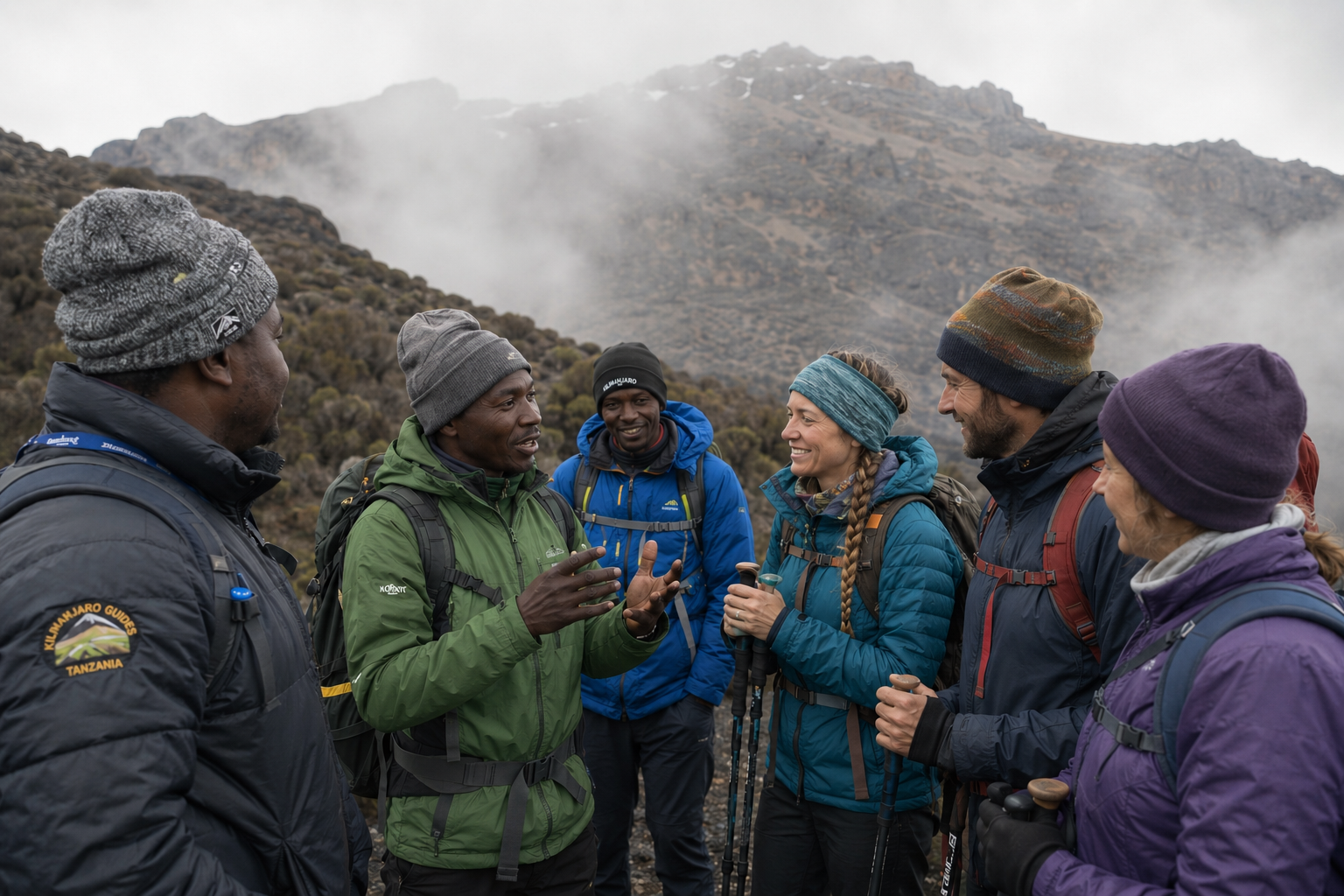
Jambo — “Hello”
One of the first Swahili words most climbers learn.
You’ll hear:
- “Jambo!”
- “Jambo rafiki!”
Meaning:
- “Hello!”
- “Hello friend!”
Twende — “Let’s Go!”
Usually heard in the morning when the hiking day begins.
After breakfast and gear prep, guides often call out:
“Twende!”
And the adventure begins again.
Maji — “Water”
Hydration is incredibly important on Kilimanjaro, so you’ll hear this word constantly throughout the trek.
Guides frequently remind climbers:
“Drink more maji.”
Chakula — “Food”
One of the happiest words in camp after a long hiking day.
The mountain crew prepares impressive meals throughout the climb, and “chakula” quickly becomes a favorite word among trekkers.
Why “Pole Pole” Is the Secret to Kilimanjaro Success
If there’s one phrase every Kilimanjaro climber remembers forever, it’s:
Pole Pole
Meaning:
“Slowly Slowly”
Your guides will repeat this constantly throughout the climb because pacing is one of the biggest keys to acclimatization and summit success.
Many first-time climbers arrive wanting to hike quickly, but Kilimanjaro rewards patience. Moving slowly helps conserve energy, supports altitude adjustment, and improves the overall experience.
By summit night, “Pole Pole” becomes more than a phrase — it becomes the mindset of the mountain.
Words You’ll Hear During Summit Night
Kidogo Kidogo — “Little by Little”
During difficult sections of summit night, guides often encourage climbers with:
“Kidogo kidogo.”
Meaning:
“Little by little.”
It’s a reminder that progress doesn’t need to be fast it just needs to continue.
Nguvu — “Strength”
Guides sometimes use this word while motivating climbers through difficult moments.
Hakuna Matata — “No Worries”
Yes — it’s a real Swahili phrase and commonly used throughout Tanzania.
It reflects the positive and encouraging atmosphere many climbers experience on the mountain.
The Famous Kilimanjaro Camp Songs
One of the most unforgettable parts of climbing Kilimanjaro is the energy in camp each evening.
Many mountain crews sing traditional Swahili songs to:
- encourage climbers
- celebrate summit success
- boost morale
- create community on the mountain
Some climbers arrive focused only on reaching the summit but leave talking just as much about the people they met along the way.
The laughter, dancing, singing, and encouragement from the crew often become the emotional heart of the expedition.
Do You Need to Know Swahili to Climb Kilimanjaro?
No, you absolutely do not need to speak Swahili to climb Kilimanjaro.
But learning even a few simple phrases:
- creates connection
- shows cultural respect
- improves the experience
- helps climbers feel more immersed in Tanzania
Even words as simple as:
- Jambo
- Pole Pole
- Asante Sana
can instantly bring smiles to your crew.
Why the Cultural Experience Matters
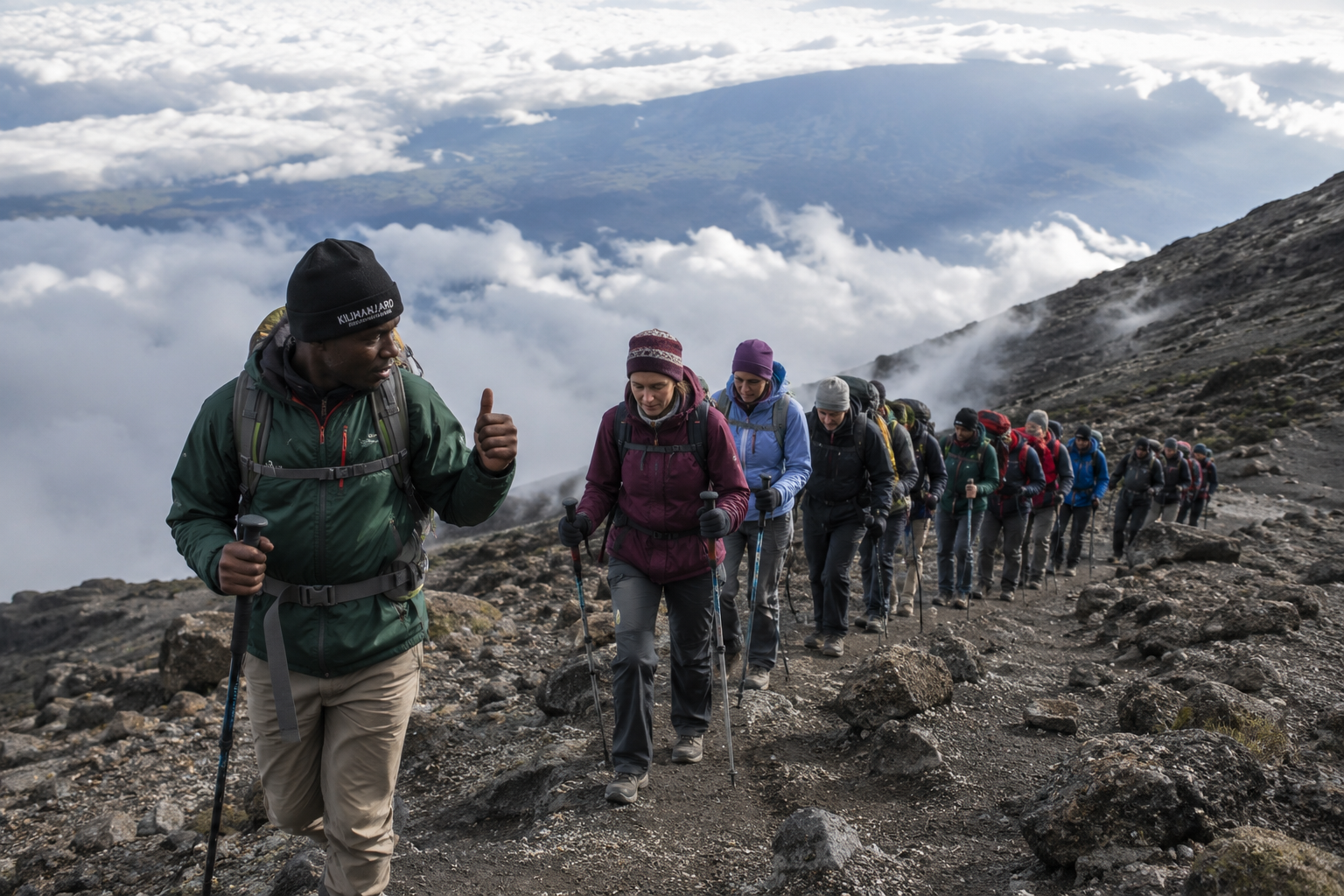
At Climb Kili, we believe Kilimanjaro is about far more than reaching the summit sign at Uhuru Peak.
It’s about:
- the friendships formed on the trail
- the guides encouraging you during difficult moments
- the songs echoing through camp
- the shared laughter at dinner
- the feeling of hearing “Karibu Tanzania” for the first time
Many of our guides began their careers as porters and have spent years on the mountain. Their knowledge, encouragement, humor, and kindness become one of the most powerful parts of the journey.
Learning a little Swahili helps deepen that connection and reminds climbers that Kilimanjaro is not just a mountain — it’s also a cultural experience.
A Few Final Words Before You Go
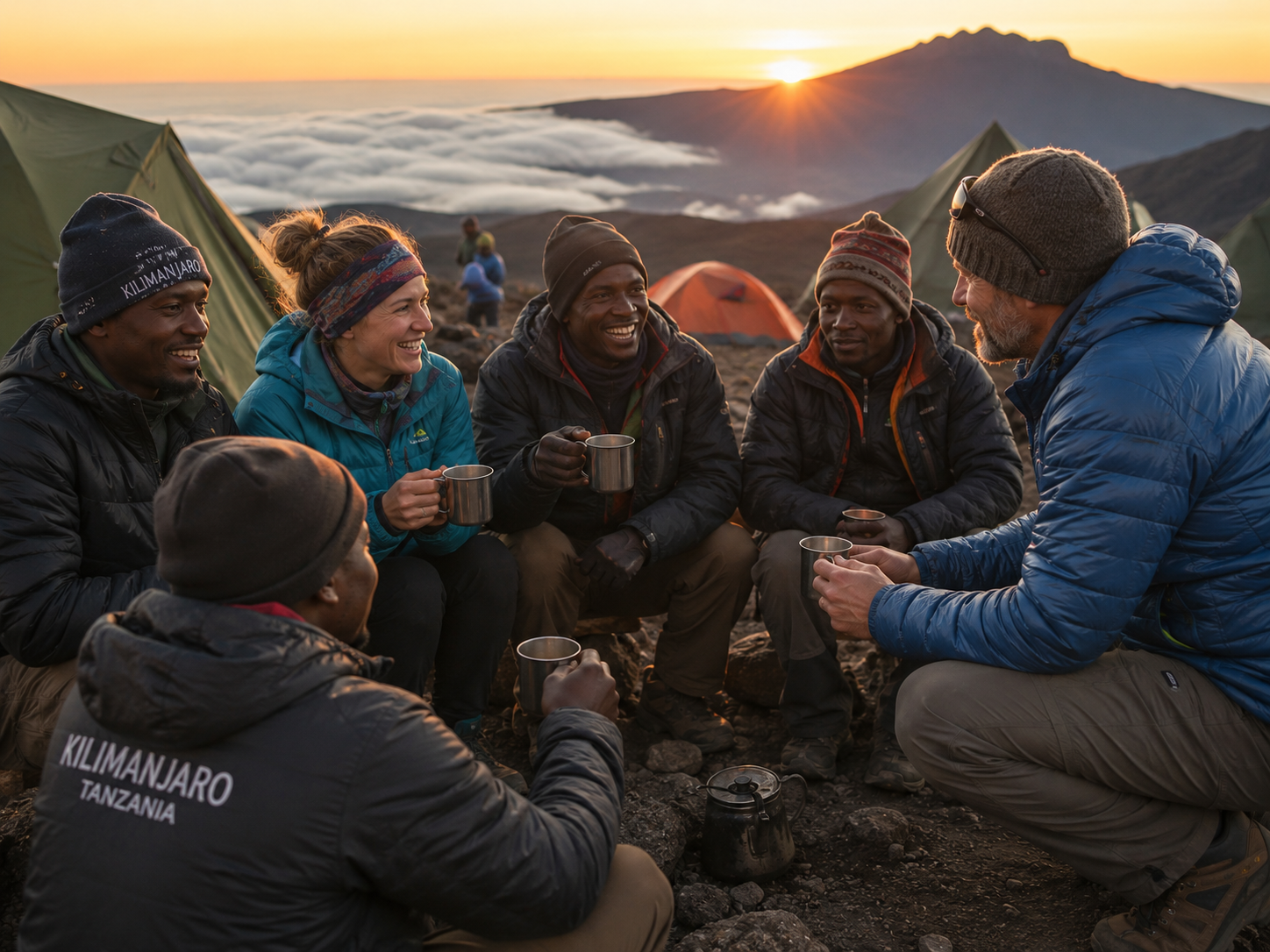
Before your trek begins, try practicing a few phrases out loud. You may be surprised how quickly you start using them naturally during the climb.
And when summit night finally arrives, don’t be surprised if you hear:
“Pole Pole… kidogo kidogo… you can do this.”
Long after the summit photos fade into memories, many climbers still remember the voices of their guides in the dark, the laughter around camp, and the feeling of hearing “Karibu Tanzania” for the very first time.
If you’re preparing for your Kilimanjaro climb and want help getting ready for the adventure ahead, contact Climb Kili anytime at info@climbkili.com.
Tutaonana juu ya mlima (See you on the mountain) 💚🏔️
FAQs About Swahili on Kilimanjaro
What language do Kilimanjaro guides speak?
Most Kilimanjaro guides speak both Swahili and English.
Do I need to know Swahili to climb Kilimanjaro?
No, but learning a few phrases can make the experience more fun and culturally immersive.
What does Pole Pole mean?
“Pole Pole” means “slowly slowly” and is one of the most common phrases used on Kilimanjaro.
What is the most common phrase on Kilimanjaro?
Many climbers hear “Pole Pole” more than any other phrase during the trek.
How do you say thank you in Swahili?
“Asante Sana” means “thank you very much.”