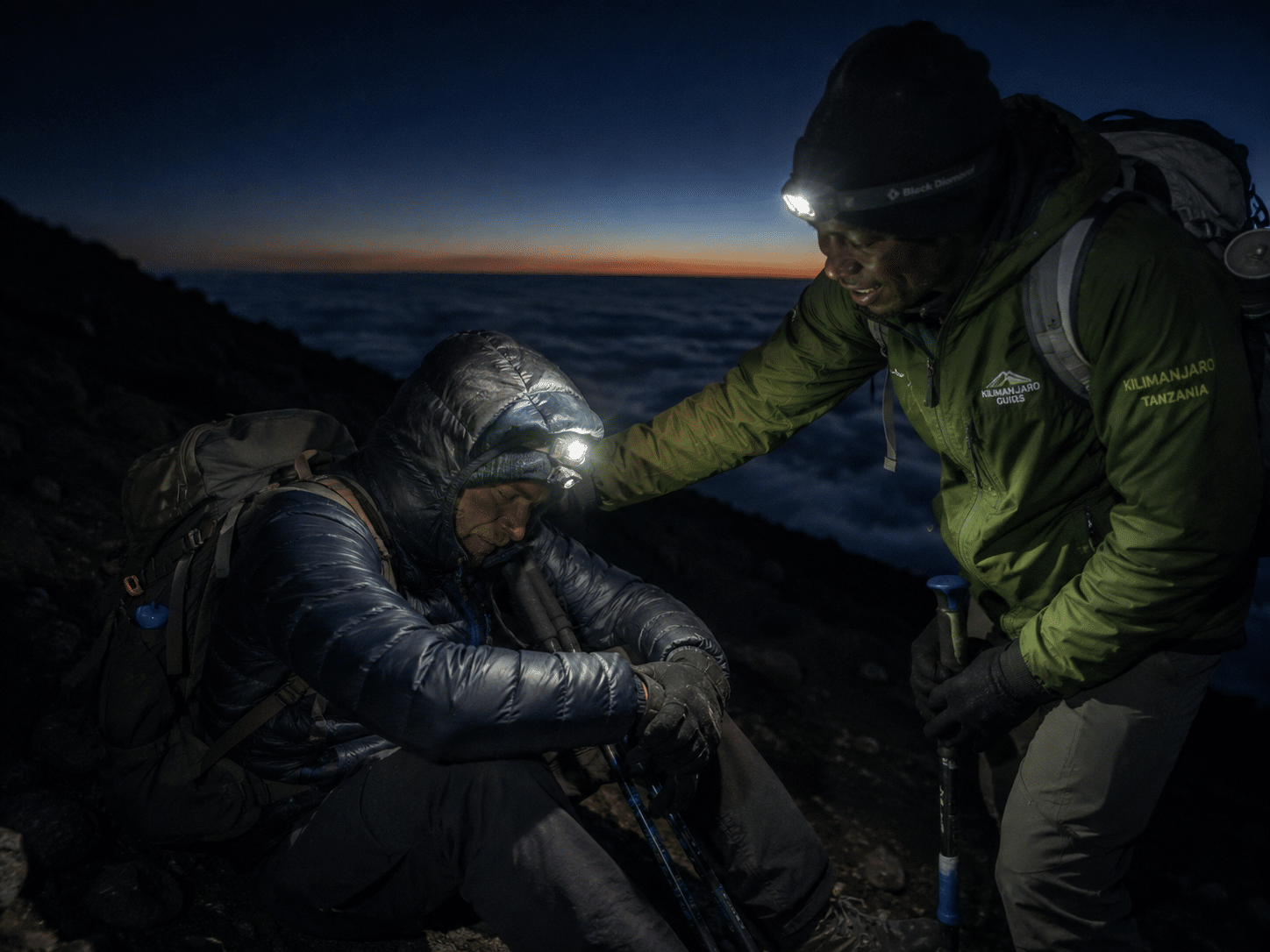
Every year, thousands of climbers stand on the summit of Mount Kilimanjaro and celebrate one of the biggest achievements of their lives. But not every trek ends at Uhuru Peak.
Some climbers turn back before the summit.
And while very few companies openly talk about it, it’s actually one of the most important parts of responsible mountain safety.
The vast majority of Climb Kili trekkers successfully reach the summit, especially on longer acclimatization-focused routes. But on rare occasions, some climbers make the decision to descend early for safety reasons.
The truth is:
Turning back on Kilimanjaro is not failure.
In many situations, it is the smartest, safest, and bravest decision a climber can make.
At Climb Kili, we believe honest conversations about altitude, acclimatization, and mountain safety matter because the summit is optional getting home safely is not.
Why Do Some Climbers Turn Back on Kilimanjaro?
The most common reason climbers do not summit Kilimanjaro is altitude sickness.
At 19,340 ft (5,895 m), Kilimanjaro is a serious high-altitude mountain. Even extremely fit hikers can struggle because altitude affects every person differently.
Common reasons climbers turn around include:
- Altitude sickness symptoms
- Difficulty acclimatizing
- Severe exhaustion during summit night
- Dehydration
- Gastrointestinal illness
- Injury or pain
- Anxiety or panic at altitude
- Unsafe oxygen saturation levels
- Weather conditions
In many cases, climbers are physically strong enough to continue hiking but their body is not responding well to the altitude.
That’s why experienced guides closely monitor climbers throughout the trek and why understanding altitude sickness on Kilimanjaro is such an important part of preparation.
What Does Altitude Sickness Feel Like on Kilimanjaro?
Altitude sickness can begin with mild symptoms and gradually worsen if elevation gain continues too quickly.
Many climbers describe symptoms such as:
- headache
- nausea
- dizziness
- unusual fatigue
- loss of appetite
- difficulty sleeping
- shortness of breath
- confusion or disorientation
Summit night on Kilimanjaro begins around midnight in freezing temperatures. Climbers hike slowly for hours in darkness using headlamps, often battling exhaustion, cold, altitude, and emotion at the same time.
This is why proper acclimatization matters so much.
Choosing a longer acclimatization-focused route can dramatically improve summit success and reduce the likelihood of needing to turn back early. Understanding why acclimatization matters on Kilimanjaro is one of the most important parts of preparing for the climb.
How Common Is It to Turn Back on Kilimanjaro?
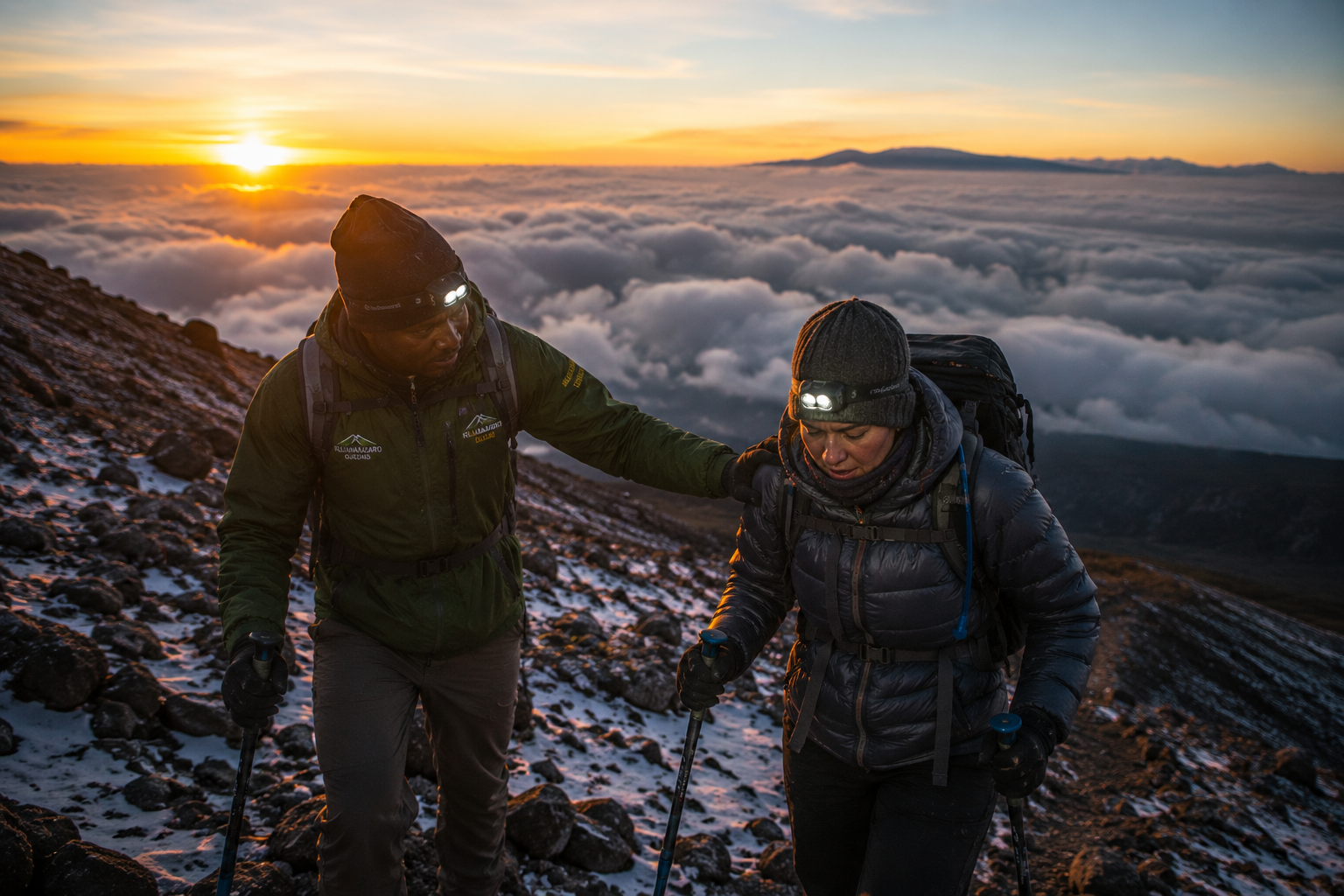
Most climbers successfully reach the summit, especially on routes designed for stronger acclimatization.
However, every season, some trekkers descend before reaching Uhuru Peak and importantly:
Turning back is part of responsible mountain culture.
On Kilimanjaro, experienced guides are trained to prioritize climber wellbeing above summit statistics.
No reputable operator wants a climber pushing beyond safe limits simply for a summit photo.
Learning about Kilimanjaro summit success rates can also help climbers set realistic expectations before arriving in Tanzania.
How Is the Decision Made?
One of the biggest fears many climbers have is:
“What if I don’t know when to stop?”
That’s where experienced mountain guides become incredibly important.
At Climb Kili, guides perform regular health monitoring throughout the trek, including:
- oxygen saturation checks
- symptom discussions
- pace observation
- hydration evaluation
- energy monitoring
You can learn more about oxygen checks and safety procedures on Kilimanjaro and how guides monitor climbers during the expedition.
Sometimes a climber chooses to descend voluntarily. Other times, guides strongly recommend turning back based on safety concerns.
The decision is never about toughness or mental weakness.
It’s about:
- how the body responds to altitude
- whether symptoms are improving or worsening
- overall mountain safety
As many experienced guides say:
“A good guide knows the summit is optional, but getting home safely is mandatory.”
Turning Around Early Is Different Than a Rescue
One important thing many first-time climbers misunderstand is that a turnaround does not automatically mean an emergency rescue.
In many situations:
- the descent is precautionary
- the climber walks down normally
- symptoms improve quickly after losing elevation
- the situation remains controlled and safe
Descending early is often simply a smart mountain decision made before symptoms become severe.
What Does the Descent Look Like?
Many climbers worry that turning around means descending alone or being left behind. That is not how reputable Kilimanjaro operations work.
If a climber descends:
- a guide accompanies them
- the pace adjusts safely
- health continues being monitored
- support remains in place throughout the descent
In many cases, climbers begin feeling significantly better after losing elevation.
The team’s focus immediately shifts from summit goals to recovery, comfort, and safety.
What Happens After Descending?
After returning to lower elevation, climbers often:
- rest at camp or the hotel
- rehydrate and recover
- reconnect with their group later
- begin feeling physically stronger within hours
Emotionally, the experience can be more complicated.
Some climbers cry when they make the decision to descend. Others feel relief. Many feel both at the same time.
Months of training, anticipation, and emotion are tied to the summit goal, so disappointment is completely normal.
But experienced guides often remind climbers:
The mountain will always be there.
Turning Back Can Be the Brave Decision
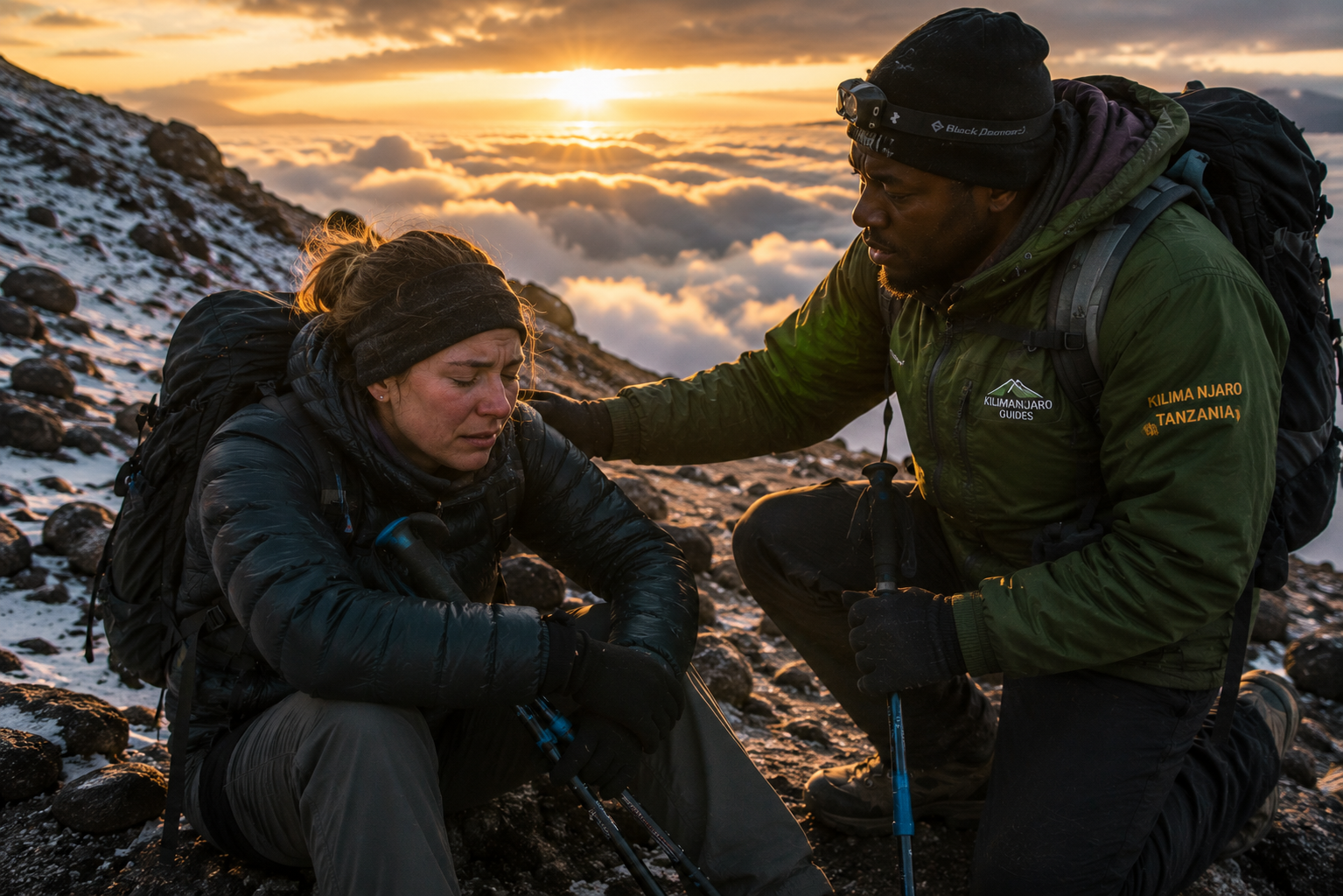
Mountain culture sometimes glorifies pushing through at all costs. But experienced climbers understand something very different:
Good decisions are what bring climbers home safely.
Continuing higher while experiencing dangerous altitude symptoms is not bravery. Listening to guides, respecting your body, and making a safe decision is what truly matters.
At high altitude, ego can become dangerous. Good judgment matters far more than summit photos.
For many climbers, understanding the mental side of climbing Kilimanjaro becomes just as important as physical training.
Some Climbers Return and Summit Later
One important thing many people don’t realize:
Some climbers who turn back later return and successfully summit Kilimanjaro.
The first experience often teaches valuable lessons about:
- pacing
- hydration
- acclimatization
- nutrition
- mindset
- summit night preparation
Sometimes the body simply responds differently on another attempt.
For many climbers, returning to Kilimanjaro becomes deeply meaningful because they approach the mountain with greater patience and respect for altitude.
Why Honest Conversations About This Matter
Very few operators openly discuss Kilimanjaro turnarounds because they worry it may discourage bookings.
We believe the opposite is true.
Honest conversations about mountain safety build trust and help climbers prepare realistically for the experience ahead.
Kilimanjaro is an extraordinary achievement but it is still a serious high-altitude environment that deserves respect.
At Climb Kili, safety is never treated as failure.
How Climb Kili Prioritizes Safety
Our team focuses heavily on:
- acclimatization-focused itineraries
- experienced TNPA-certified guides
- Wilderness First Responder (WFR) trained guides
- twice-daily health monitoring
- oxygen saturation checks
- emergency oxygen on every climb
- portable hyperbaric chambers for emergency response
- emergency evacuation preparation
- small group support
If you’re comparing routes, understanding Lemosho vs Machame for acclimatization can help climbers choose an itinerary that better supports summit success.
We also encourage climbers to prepare carefully with proper training for Kilimanjaro and appropriate Kilimanjaro packing lists before arriving in Tanzania.
FAQs About Turning Back on Kilimanjaro
How common is it to turn back on Kilimanjaro?
Most climbers summit successfully, especially on longer acclimatization-focused routes, but some trekkers descend early each season due to altitude or safety concerns.
Can you try Kilimanjaro again after turning back?
Yes. Many climbers return later and successfully summit after gaining more altitude experience and preparation.
Does turning around always mean severe altitude sickness?
No. Many descents are precautionary and happen before symptoms become dangerous.
Are climbers forced to descend?
Experienced guides may strongly recommend descending if safety concerns develop at altitude.
What happens if a guide tells you to stop climbing?
The focus immediately shifts toward safely descending and helping the climber recover at lower elevation.
Your Safety Is Always the Summit
For many climbers, Kilimanjaro becomes one of the most transformative experiences of their lives — regardless of whether they stand on Uhuru Peak.
The mountain teaches resilience, humility, patience, and respect for the body in ways few experiences can.
And sometimes, the strongest thing a climber can do is listen to their guides, trust the process, and choose safety.
Because no summit photo is more important than coming home safely to the people waiting for you.
On Kilimanjaro:
Your safety is always the summit.
If you’re preparing for your climb and want honest guidance about routes, acclimatization, and preparation, contact Climb Kili anytime at info@climbkili.com.
Tutaonana juu ya mlima (See you on the mountain) 💚🏔️