
There are plenty of blogs explaining what to pack for Mount Kilimanjaro.
How to train.
What summit night looks like.
But very few people talk honestly about what it actually feels like to stand on the Roof of Africa after one of the hardest nights of your life.
Not the itinerary.
Not the checklist.
The feeling.
Because summiting Kilimanjaro is strange.
It’s beautiful and exhausting at the same time.
It’s freezing cold and emotionally overwhelming.
And somewhere between the darkness, the altitude, and the sunrise above the clouds, many climbers discover something about themselves they didn’t expect.
Summit Night Starts Before Your Body Feels Ready
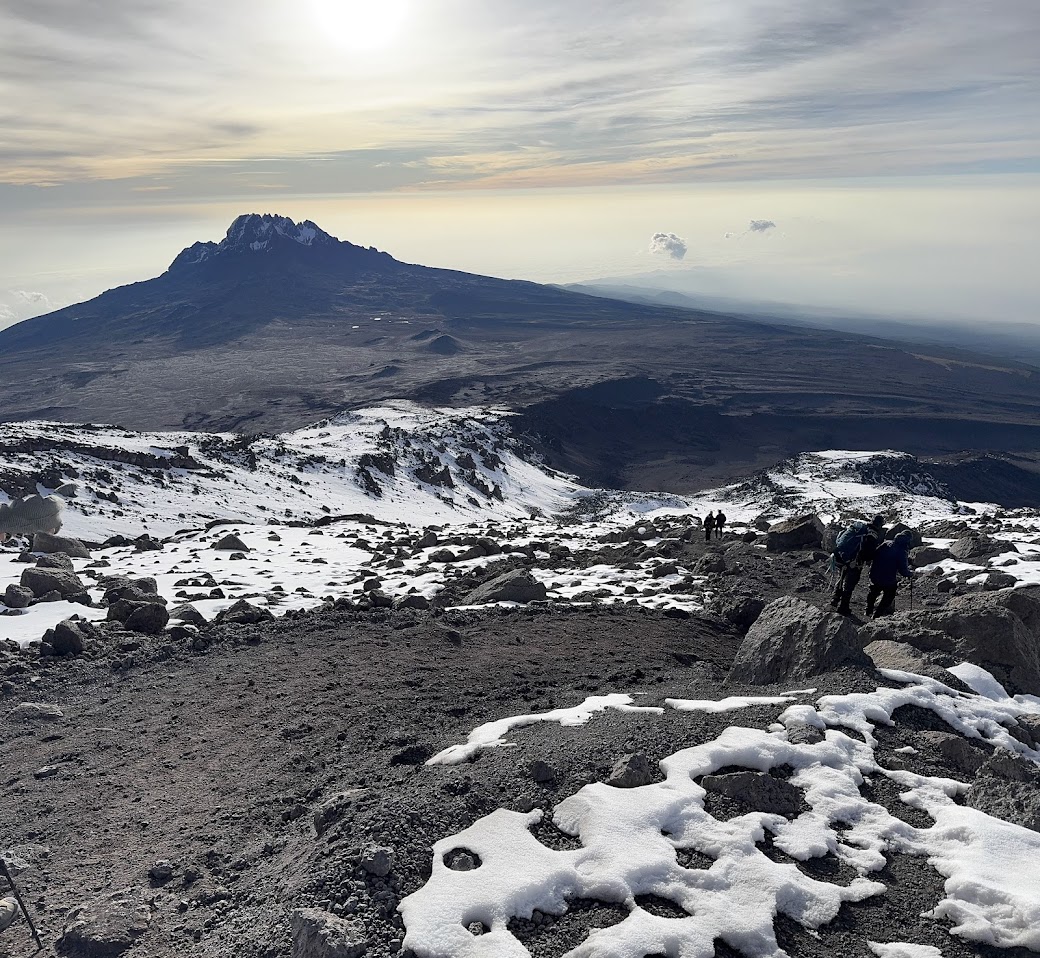
Most summit pushes begin around:
midnight.
You wake up in darkness after only a few hours of broken sleep.
The tent is cold.
Your boots feel frozen.
The air outside burns slightly in your lungs when you inhale.
And for a few quiet moments, many climbers ask themselves:
“Why am I doing this?”
Outside, headlamps move silently through camp while guides pour hot tea and help climbers layer up against the cold.
Hands wrap around warm mugs.
Zippers rustle softly in the dark.
No one talks very loudly.
Everyone knows this is the hardest day.
You begin hiking slowly into the darkness with only:
- the crunch of volcanic scree beneath your boots
- heavy breathing in cold air
- tiny headlamps drifting upward across the mountain
And almost immediately, the mountain feels different.
The Altitude Changes Everything
At high altitude, even simple movement feels strangely difficult.
Adjusting your backpack feels tiring.
Taking deep breaths never quite feels like enough air.
Your heartbeat feels louder.
Your legs feel slower.
Some climbers develop headaches or nausea.
Others simply feel exhausted in a way they’ve never experienced before.
The hardest part for many people is that altitude doesn’t care how fit you are.
Strong athletes struggle.
Older climbers succeed.
The mountain treats everyone differently.
That’s why guides constantly repeat:
“Pole Pole.”
Slowly slowly.
Because on Kilimanjaro, speed stops mattering.
The only thing that matters is continuing forward.
Learning about altitude sickness on Kilimanjaro before your trek helps many climbers understand what their body may experience during summit night.
The Mountain Begins to Feel Bigger Than You
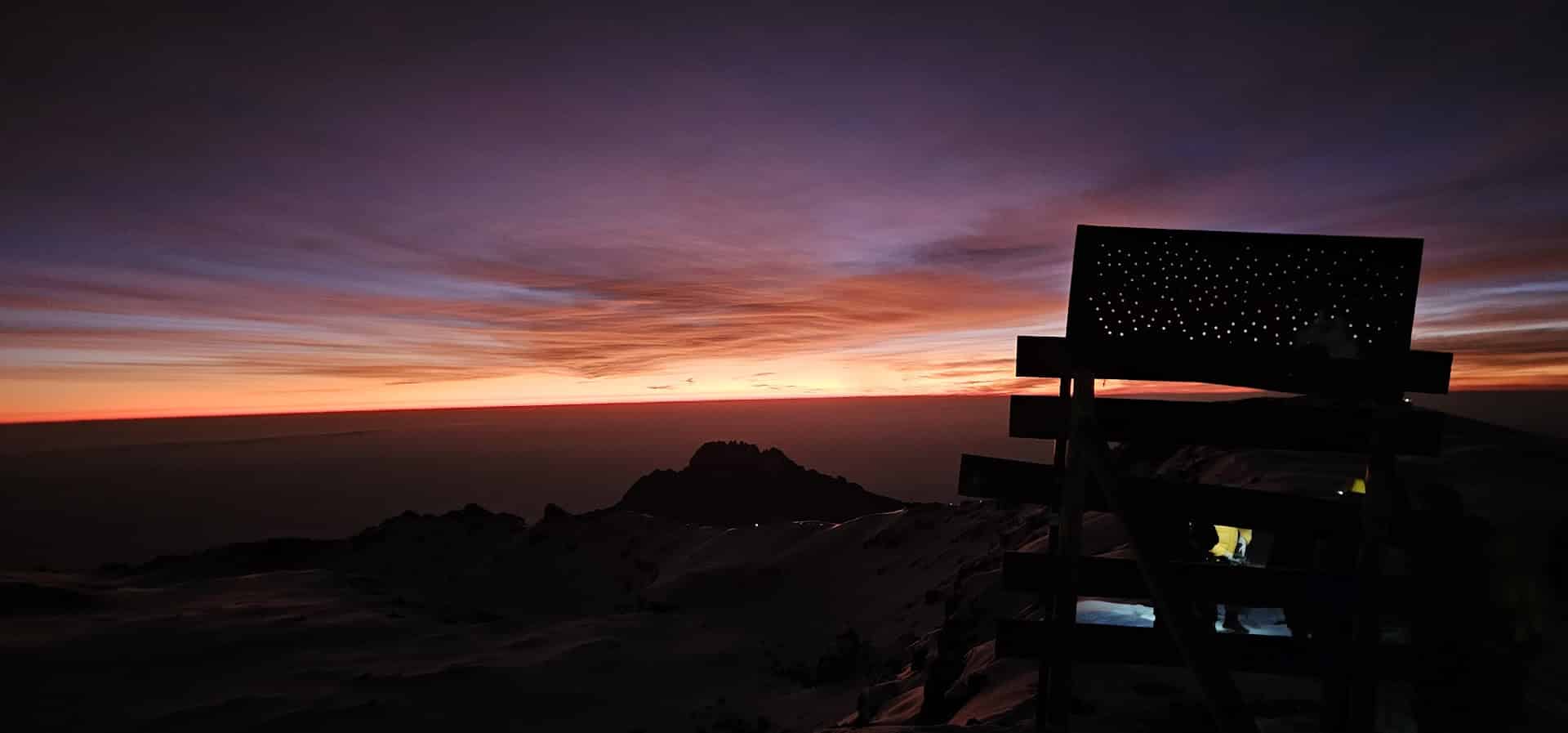
Somewhere above the clouds, surrounded by darkness and volcanic silence, the mountain suddenly feels enormous.
And you feel very small.
The trail disappears endlessly upward into the darkness.
The wind moves across the slope.
Headlamps flicker quietly ahead like distant stars.
And somewhere during the climb, many trekkers stop thinking about the summit entirely.
The goal becomes smaller:
- one breath
- one step
- one switchback at a time
You Stop Thinking About Everyday Life
One of the strangest parts of summit night is how completely normal life disappears.
Emails stop mattering.
Phones stop mattering.
Stress from home fades away.
The mountain reduces life to something incredibly simple:
- breathe
- walk
- continue
At nearly 20,000 feet, your entire world narrows down to movement and survival.
And oddly, many climbers describe that simplicity as peaceful.
Hours Begin to Blur Together
Somewhere during the climb, time starts feeling strange.
You stop thinking about photos.
You stop asking how much farther remains.
Your world becomes incredibly small.
Sometimes climbers cry quietly without fully understanding why.
Sometimes people become completely silent.
Frozen energy bars stay untouched in jacket pockets.
Guides gently encourage climbers forward in the darkness.
And sometimes strangers quietly support each other because everyone on the mountain understands the same thing:
this is hard.
Quick Truth:
On summit night, nobody looks powerful.
Everyone looks cold, exhausted, emotional, and human.
The Mountain Gets Quiet Before Sunrise
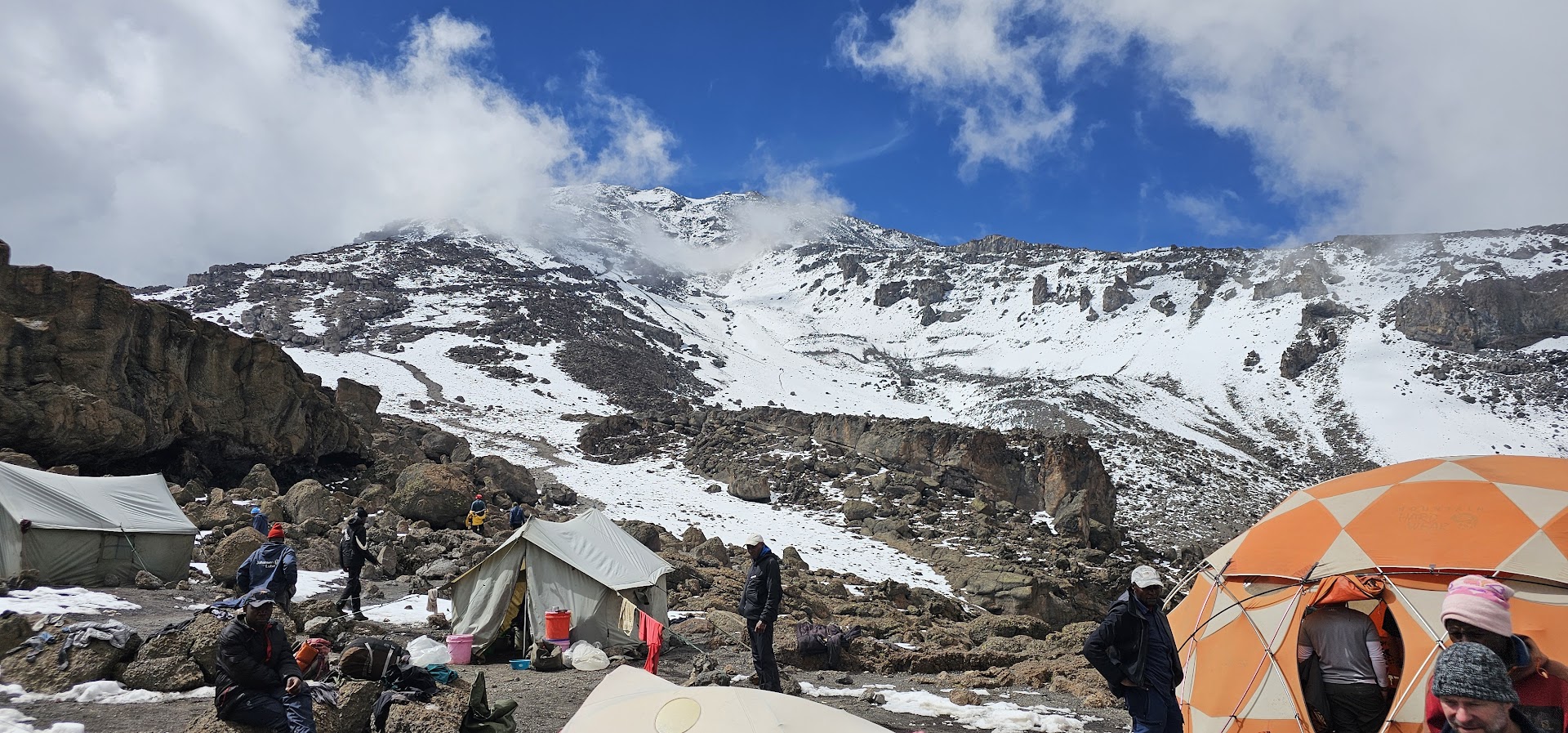
A few hours before sunrise, the cold usually feels most intense.
Water bottles begin freezing.
Hands go numb inside gloves.
The wind cuts through layers.
And yet, the higher you climb, the more unreal the landscape becomes.
Below you:
- clouds drift across Africa
- distant lightning flashes far beneath the mountain
- tiny headlamps snake silently through the darkness
It no longer feels like ordinary hiking.
It feels like existing somewhere between exhaustion and awe.
Reaching Stella Point Feels Emotional
For many climbers, reaching Stella Point is the first moment they realize:
“I might actually do this.”
Some people sit down and cry.
Others stare silently at the horizon.
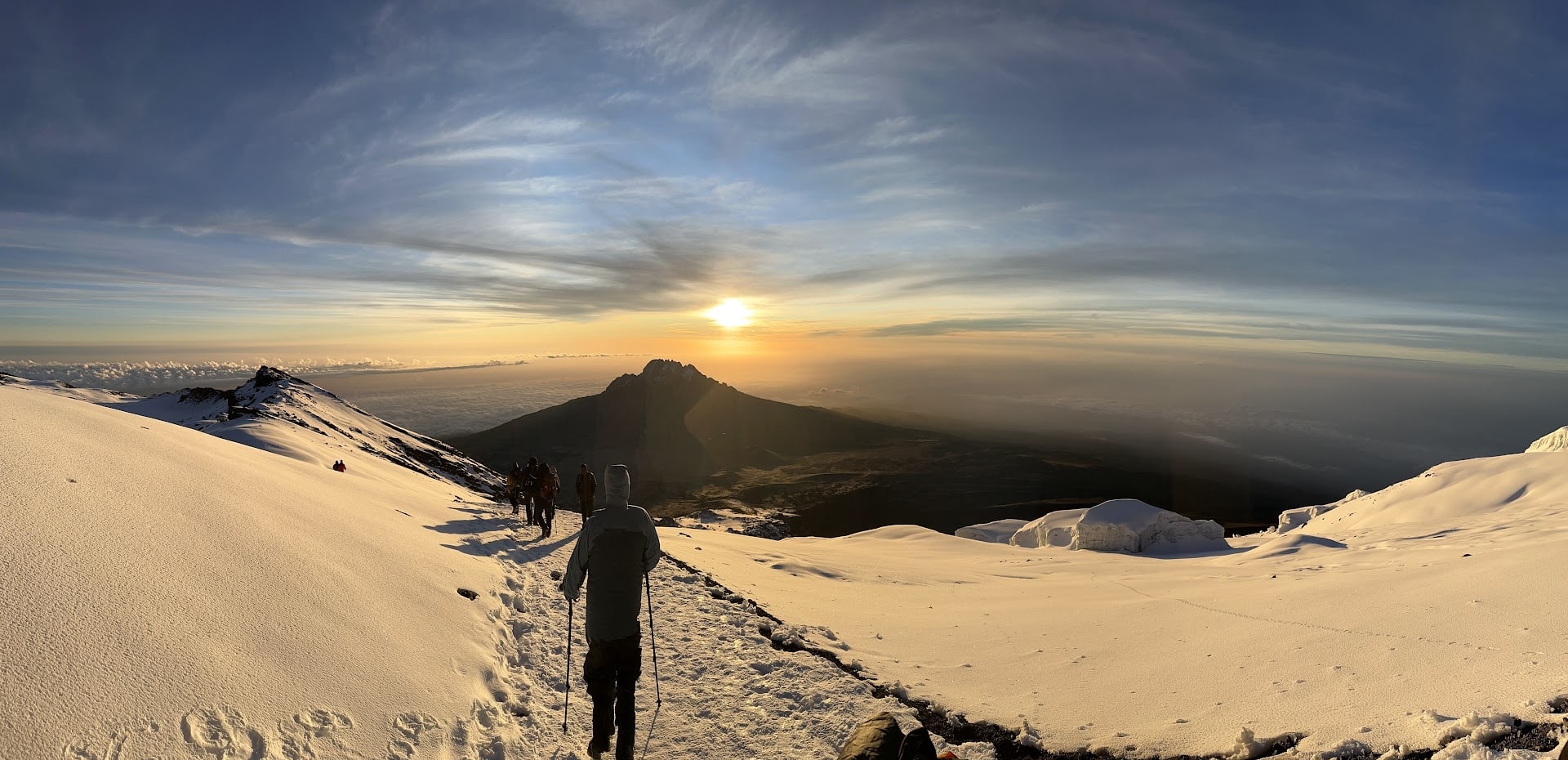
And slowly, after hours of darkness, the first sunlight begins touching the glaciers above the crater rim.
The sky changes:
- black
- deep blue
- orange
- gold
Warm sunlight slowly reaches frozen faces.
Clouds glow beneath the summit.
And after hours of climbing in darkness, the light feels emotional in a way that’s difficult to explain.
Many trekkers still have another stretch to Uhuru Peak ahead but mentally, something changes here.
The summit suddenly feels real.
The Final Walk to Uhuru Peak Feels Longer Than Expected
This part surprises many climbers.
Even though the summit is close, the final stretch can feel incredibly slow because of altitude and exhaustion.
Every incline feels steeper than expected.
Every step feels deliberate.
Breathing remains heavy.
And then eventually, almost suddenly:
you see the sign.
“Congratulations! You are now at Uhuru Peak, Tanzania.”
And for a moment, everything becomes emotional all at once.
What Does It Feel Like at the Summit?
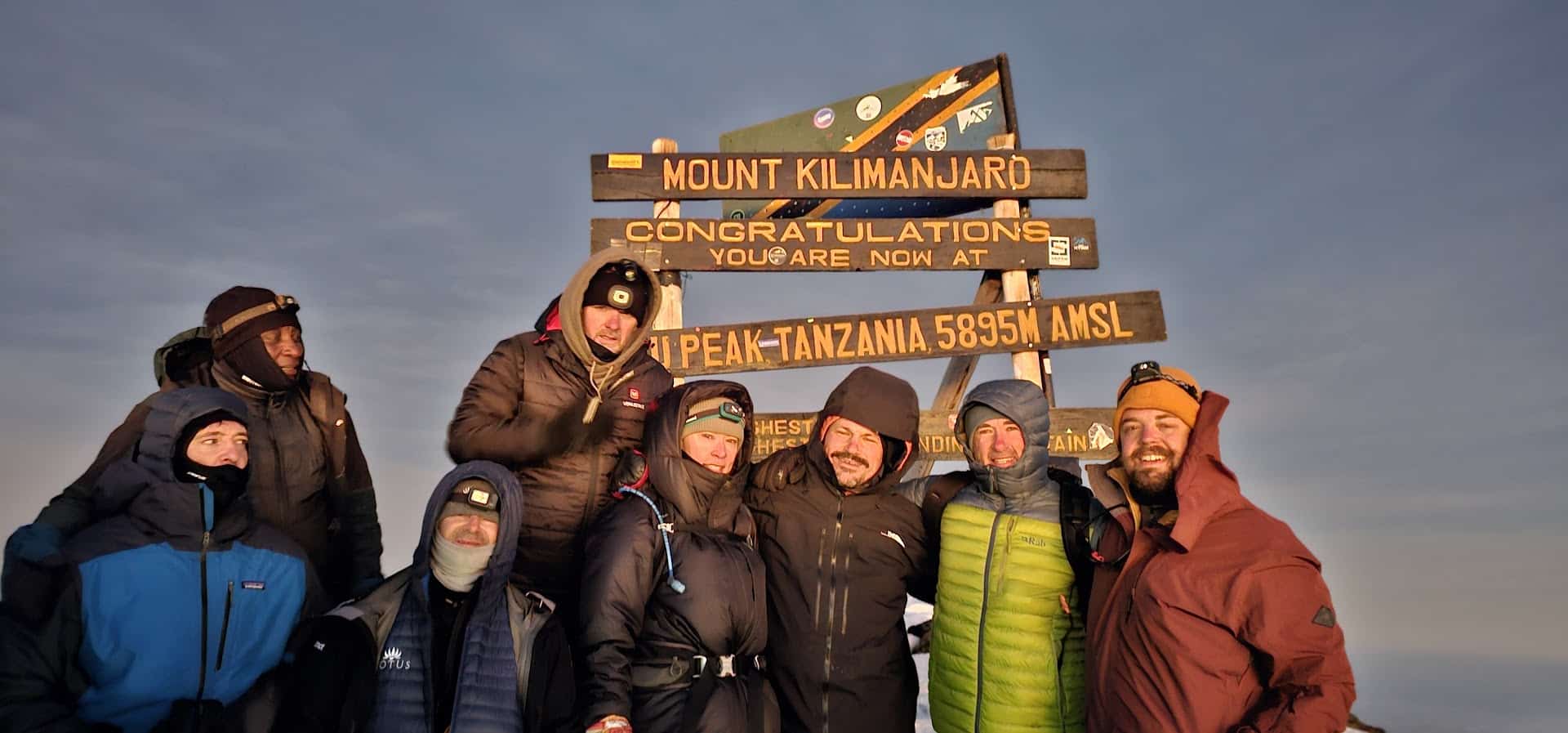
Honestly?
Different for everyone.
Some climbers cry immediately.
Some laugh.
Some stand silently staring at the glaciers and clouds because their brain can barely process where they are.
Many people feel:
- relief
- disbelief
- gratitude
- exhaustion
- pride
- emotion they can’t fully describe
And strangely, some climbers don’t feel triumphant right away.
They just feel overwhelmed.
Because after hours of darkness, cold, altitude, and effort, the summit feels less like “winning” and more like surviving something meaningful.
The Summit Sign Isn’t Always the Most Important Part
This surprises many climbers too.
Sometimes the most meaningful moment isn’t actually touching the summit sign.
Sometimes it’s:
- hearing your guide say “you made it”
- seeing sunrise above the clouds
- hugging another exhausted climber
- realizing you never gave up
For many trekkers, the emotional weight of the experience comes from the journey itself not the photo at the top.
The Body Feels Completely Drained
At the summit, many climbers are:
- exhausted
- dehydrated
- emotional
- mentally foggy
Some barely want photos.
Some struggle to eat.
The body is working incredibly hard simply to function at altitude.
This is why experienced guides closely monitor climbers during summit day and why acclimatization on Kilimanjaro matters so much.
The Descent Feels Like Returning to Earth
As climbers descend, oxygen slowly becomes easier to process.
People begin talking more.
Energy gradually returns.
And the reality of what just happened starts sinking in.
The exhaustion remains.
But so does something else:
confidence.
Because somewhere during summit night, many climbers proved something to themselves.
Not that they were fearless.
Not that they were the strongest person on the mountain.
But that they could continue moving forward even when things became uncomfortable.
What Most Climbers Remember Years Later
Years later, many people barely remember:
- exact hiking times
- camp elevations
- gear details
But they vividly remember:
- hearing boots crunch through volcanic scree in darkness
- guides whispering “Pole Pole”
- sunrise above the clouds
- hugging strangers at the summit
- the feeling of standing somewhere impossible
That’s the part no itinerary can fully explain.
Why Kilimanjaro Changes So Many People
Before Kilimanjaro, many climbers quietly wonder:
“Am I really capable of this?”
And somewhere between the darkness and the sunrise, they find the answer.
Not because the mountain becomes easy.
But because they realize they can keep moving forward even when things become difficult.
For many climbers, that realization matters far more than the summit photo itself.
Could You Actually Do It?
If you’re reading this while wondering whether you’re “the kind of person” who could summit Kilimanjaro, you’re not alone.
Most climbers feel uncertain beforehand.
Most are nervous about altitude.
Most wonder whether they’re strong enough.
And yet every year, ordinary people from all over the world stand at Uhuru Peak after slowly climbing one step at a time.
Not because they were fearless.
But because they kept going.
Long after the exhaustion fades, many climbers remember the same thing:
for one sunrise above the clouds, they became stronger than the voice telling them to quit.
If you’re preparing for your own Kilimanjaro climb and want honest guidance about routes, acclimatization, and preparation, contact Climb Kili anytime at info@climbkili.com.
Tutaonana juu ya mlima (See you on the mountain) 💚🏔️
FAQs About Summiting Kilimanjaro
How hard does summit night feel?
Most climbers describe summit night as physically exhausting, emotionally intense, and mentally challenging because of altitude, cold, and lack of sleep.
Do people cry on Kilimanjaro?
Yes. Many climbers become emotional during summit night or at Uhuru Peak because of exhaustion, relief, and the emotional intensity of the experience.
How cold is summit night on Kilimanjaro?
Temperatures can fall below 0°F (-18°C) depending on conditions and wind chill.
What does altitude feel like on Kilimanjaro?
Many climbers experience heavier breathing, fatigue, headaches, slower movement, and reduced energy at high altitude.
How long is the summit push?
Most summit pushes last between 6–8 hours to reach Uhuru Peak.
Is summiting Kilimanjaro emotional?
For many climbers, yes. The combination of exhaustion, altitude, sunrise, and achievement often creates a deeply emotional experience.