Life on the mountain
Sleeping on Kilimanjaro: Tents, Camps and Staying Warm at Night
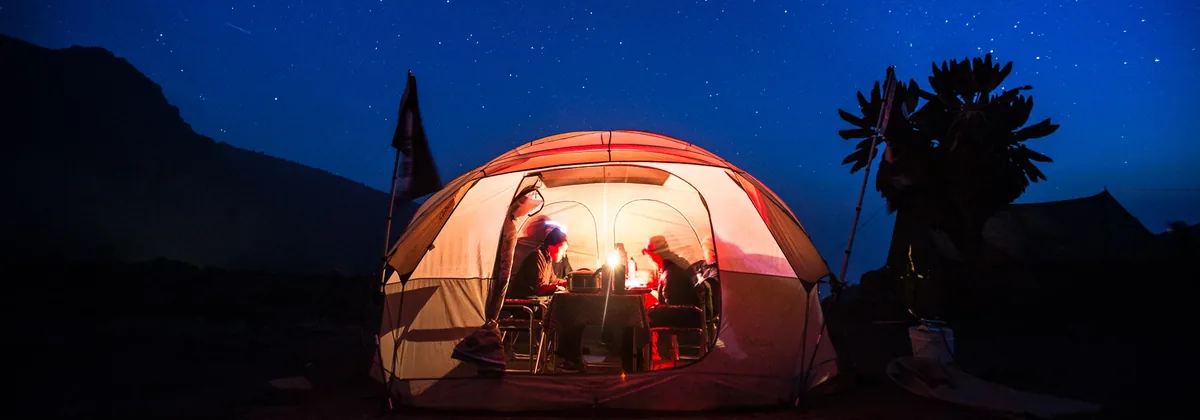
On Kilimanjaro you sleep in tents at set campsites, and your crew carries and pitches them for you. With Climb Kili, every climber gets a tent space, a custom 1.5-inch foam sleeping pad and a separate eating tent. You bring or rent a sleeping bag rated to 0°F (about -18°C).
You share with a same-gender tentmate, or pay $150 total for your own tent and hotel room. Here is what nights on the mountain are really like.
- 6Small groups of 6 climbers, max
- ✓Locally owned and operated in Tanzania
- ▲Higher Kosovo summit camp for a better summit chance
- ★Authentic Africa, from summit to safari
Most Recommended Locally Owned Company on TripAdvisor · 1,600+ verified reviews · Summiting Kilimanjaro since 1984
Tents
Your tent on Kilimanjaro
- Included: all personal and group tents, plus a separate eating tent for meals. See food on Kilimanjaro.
- Sharing: solo climbers are paired with a same-gender tentmate. If no pairing can be made, the tent is yours at no cost.
- Your own tent: a $150 total fee covers your own tent and hotel room for the whole trip.
- Stand-up tent with a cot: available, but we honestly don't recommend it, because it's colder.
Read more in choosing the best tent for Kilimanjaro.
Camps
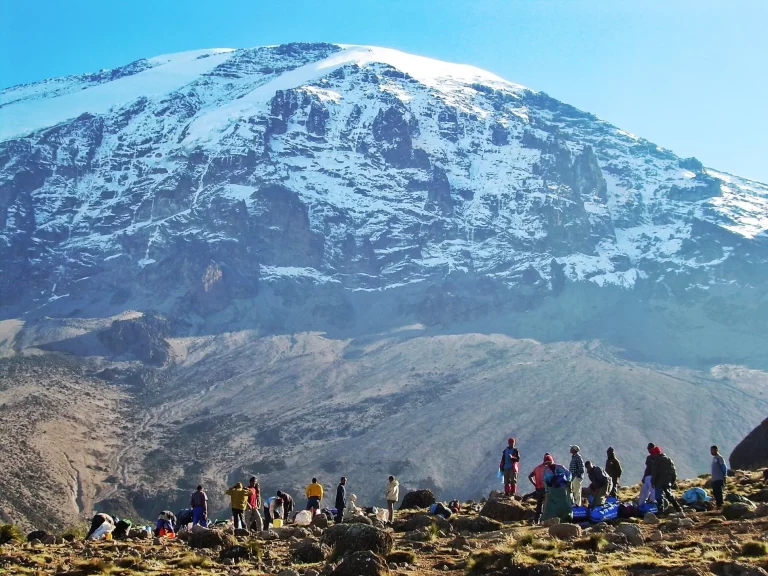
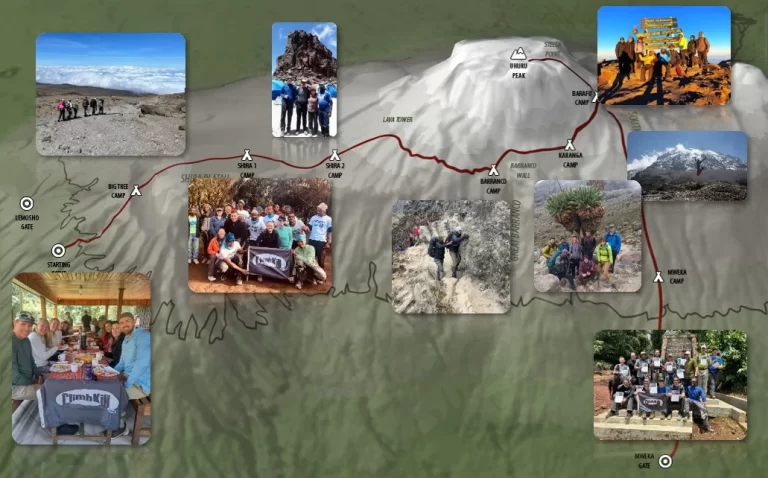
The camps on our two routes
7-Day Machame (6 nights on the mountain)
- Machame Camp
- Shira Camp
- Barranco Camp
- Karanga Camp
- Kosovo Camp (summit night starts here)
- Mweka Camp
8-Day Lemosho (7 nights on the mountain)
- Mti Mkubwa Camp
- Shira Camp
- Moir Camp
- Barranco Camp
- Karanga Camp
- Kosovo Camp (summit night starts here)
- Mweka Camp
Both routes use the higher Kosovo Camp before the summit instead of the usually crowded Barafu Camp. See our Kosovo Camp advantage. Summit night starts from Kosovo and ends at Uhuru Peak.
Staying warm
Staying warm at night
Nights get colder as you climb, and the UIAA Medical Commission notes that June through August is the coldest time of year on the mountain. What keeps you warm:
- A sleeping bag rated to 0°F (about -18°C). You can rent one, plus a fleece liner for extra warmth.
- The included 1.5-inch foam pad between you and the cold ground.
- A warm insulated jacket and layers for camp.
- A standard tent rather than a stand-up tent, which is colder.
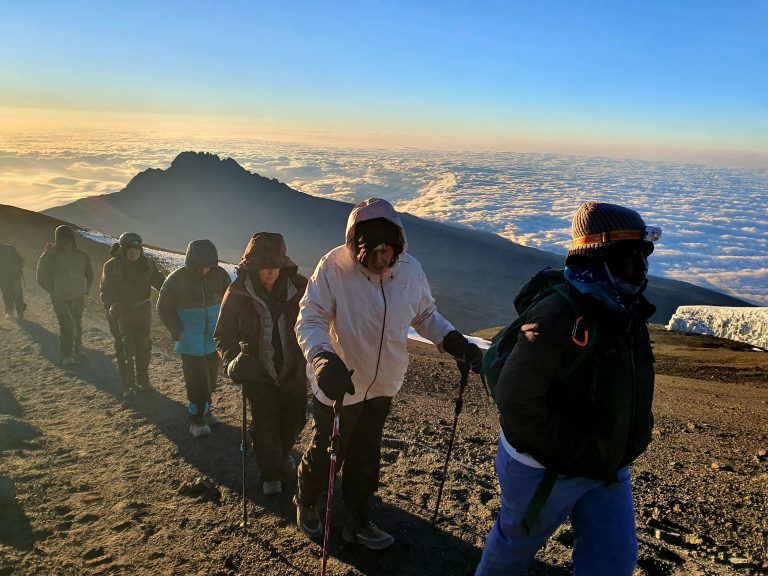
Arriving at camp
What it's like arriving at camp
Your porters trek ahead, so by the time you walk into camp your tent is set up with your personal pack inside, and your dining tent is ready for meals. Porters often welcome you into camp with song.
Your guides check every climber's oxygen levels daily, and the eating tent gives you a dry place to rest and eat, even if it rains.
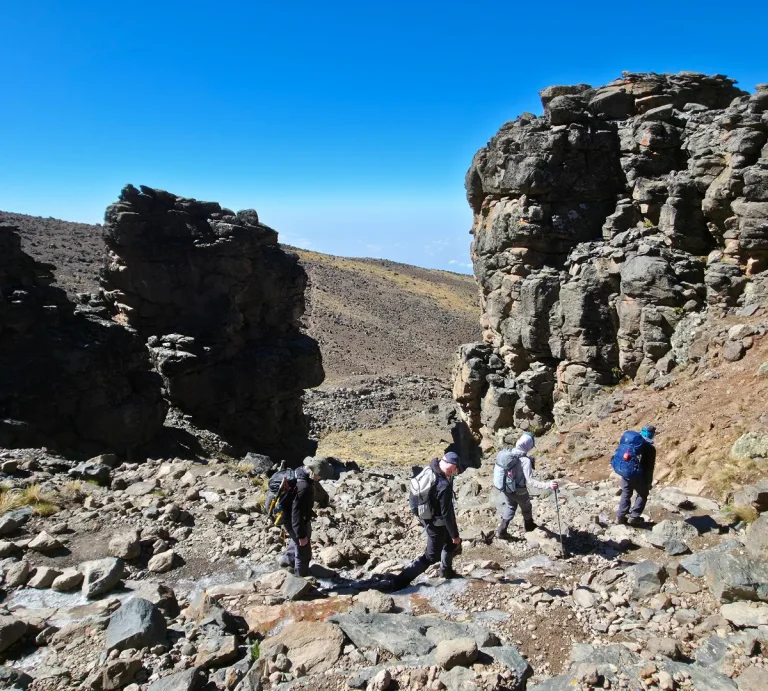
Toilets
Toilets and washing
Your group has its own private portable chemical toilet and toilet tent, set up at every campsite and lunch spot. Hand-washing water is provided at every meal. After the climb, a hot shower is waiting back at Summit Lodge.
Questions
Sleeping questions
Where do you sleep when climbing Kilimanjaro?
In tents at set campsites. Your crew carries and pitches the tents, and every climber also gets a foam sleeping pad and use of a separate eating tent.
Do I need to bring a tent to Kilimanjaro?
No. All personal and group tents are included in your Climb Kili package.
Can I have my own tent on Kilimanjaro?
Yes. Your own tent and hotel room cost $150 total for the whole trip. Solo climbers who can't be paired get their own tent at no cost.
What sleeping bag do I need for Kilimanjaro?
One rated to 0°F (about -18°C). You can rent one from us, plus a fleece liner.
How many nights do you camp on Kilimanjaro?
6 nights on the 7-Day Machame and 7 nights on the 8-Day Lemosho.
More answers on our Kilimanjaro FAQs page.
Tiffany Watson · Operations Director
Questions about life on the mountain?
Ask us anything, from tents to toilets. Book a free call and we'll walk you through a day on Kilimanjaro.
Or call 1-888-589-1884 · Email us
Where this comes from: Tents, pads, sleeping bag rating, toilets and camp routine are from our FAQs, What's Included and Why Choose Climb Kili. Camp names are from our Machame and Lemosho itineraries. The $150 fee is from our Booking Conditions.