

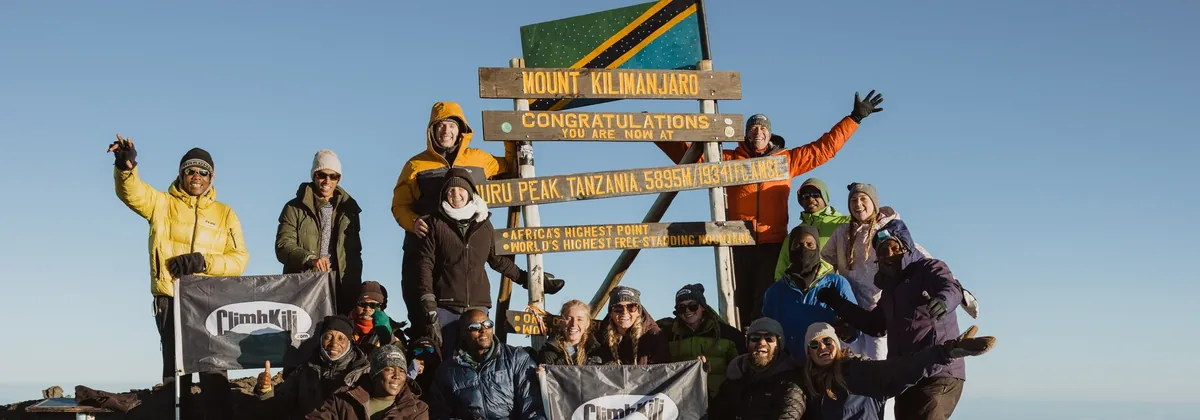
The summit
Uhuru Peak: Kilimanjaro's Summit, Explained
Uhuru Peak is the highest point on Mount Kilimanjaro, at 5,895 m (19,341 ft). It sits on the crater rim of Kibo, the tallest of Kilimanjaro's volcanic cones, and it is the highest point in Africa and one of the Seven Summits.
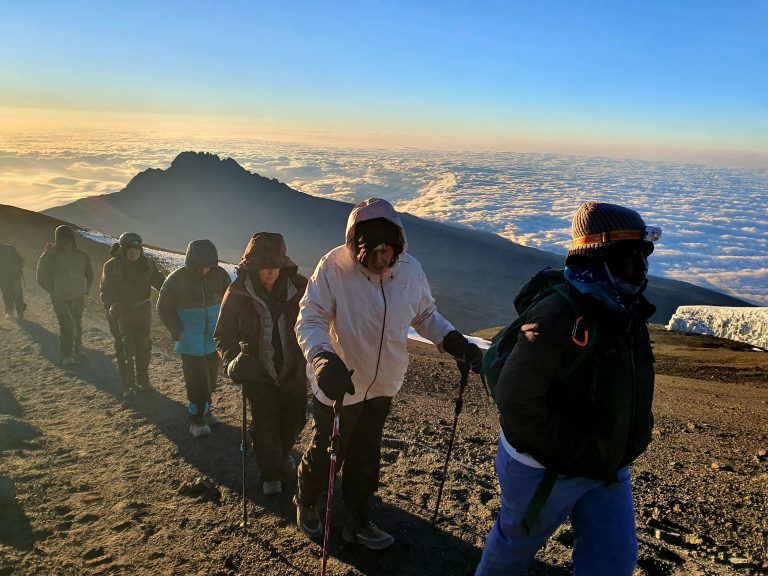
Most climbers reach it at or just after sunrise, after a night climb that starts around midnight. Here is what summit day really involves.
- 6Small groups of 6 climbers, max
- ✓Locally owned and operated in Tanzania
- ▲Higher Kosovo summit camp for a better summit chance
- ★Authentic Africa, from summit to safari
Most Recommended Locally Owned Company on TripAdvisor · 1,600+ verified reviews · Summiting Kilimanjaro since 1984
The summit
What and where Uhuru Peak is
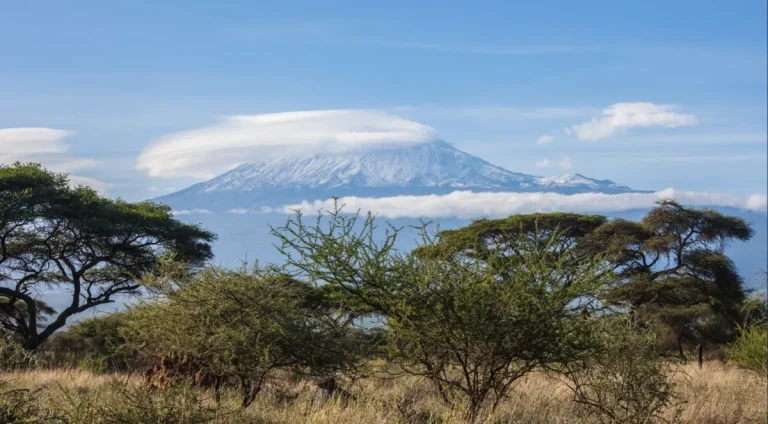
Kilimanjaro is a dormant volcano in northern Tanzania (read Is Kilimanjaro a volcano?). Uhuru Peak is its summit, on the rim of Kibo, the tallest of its volcanic cones. At 5,895 m (19,341 ft) it is the highest point in Africa, and Kilimanjaro is the tallest free-standing mountain on Earth: it rises on its own from the plains rather than as part of a range.
More numbers in our Kilimanjaro facts guide, and see where Kilimanjaro is.
Summit night
How summit night works
On both of our routes, the summit push starts from Kosovo Camp, which is higher than the usual Barafu Camp. Starting higher means a shorter, less tiring night. See our Kosovo Camp advantage.
- You rest at Kosovo in the afternoon and evening.
- Around midnight, you start climbing by headlamp, slowly, with your guides setting the pace.
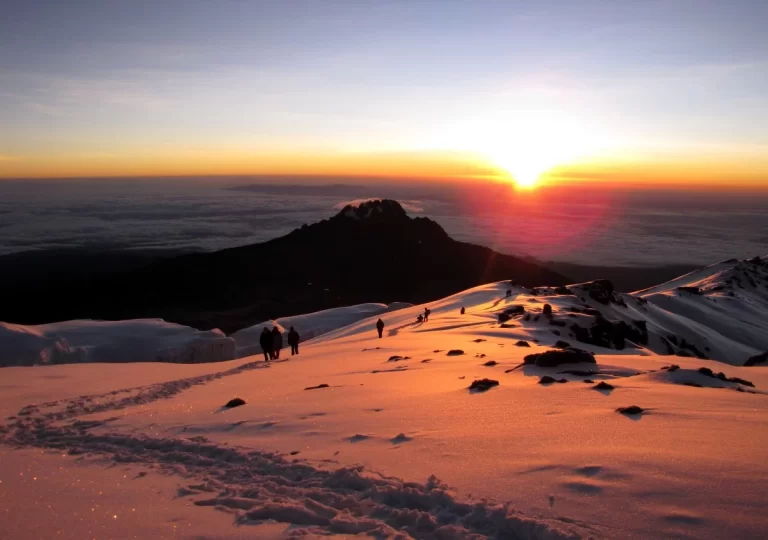
- You aim to reach Stella Point on the crater rim around dawn, in time for sunrise.
- From Stella Point it is a final push along the rim to Uhuru Peak.
On the 7-Day Machame, the ascent takes about 6 to 7 hours. Read what to expect on summit night.
Stella Point
From Stella Point to Uhuru Peak
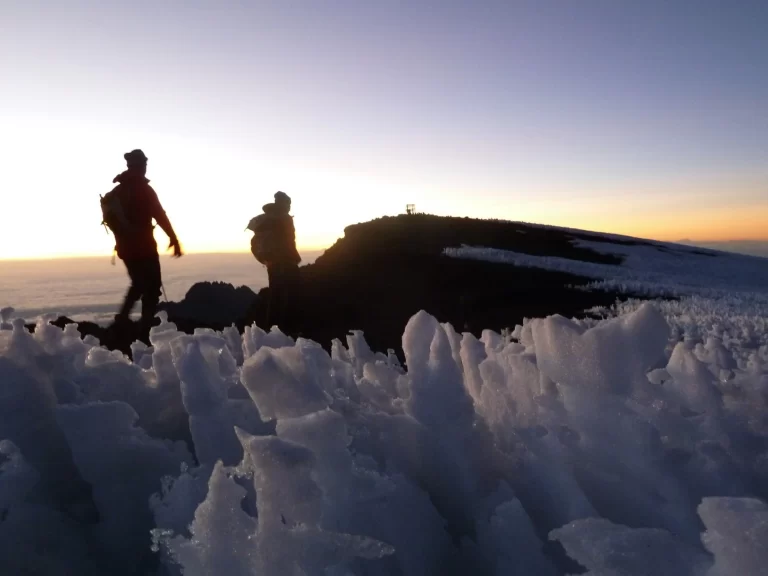
Stella Point (5,750 m / 18,885 ft) is where you reach the crater rim. The path up to it is steep, and the altitude makes it one of the hardest stretches on Kilimanjaro. Reaching the rim is a huge moment, and sunrise from up here is something climbers never forget.
From Stella Point, it is a final push along the rim to Uhuru Peak, with the summit glaciers close by. Kilimanjaro's glaciers are shrinking, so seeing them is part of what makes the climb special. Read about Kilimanjaro's glaciers.
The cold
How cold it is at Uhuru Peak
Below freezing, in every month. Temperatures at the summit can drop to -20°C (-4°F) or colder, and wind makes it feel colder. The UIAA Medical Commission notes that June through August is the coldest time of year on the mountain, and January through March the warmest.
- A warm insulated jacket and a full layering system (on our mandatory gear list).
- Warm gloves or mitts, a warm hat and a buff.
- A headlamp, also on the mandatory list. Rental headlamps run on AAA batteries.
- A sleeping bag rated to 0°F (about -18°C) for the night before.
The descent
Coming down from the summit
After photos at the summit sign, you head down. On the 7-Day Machame, you descend to Kosovo for rest and a hot lunch, then continue to Mweka Camp (3,068 m / 10,065 ft) for a celebration dinner. The descent takes about 4 to 6 hours, and summit day covers about 17 km in total (5 km up, 12 km down).
The next morning you walk out through the rainforest to Mweka Gate. Every climber receives a personal summit certificate signed by the National Park. For the celebration, the tipping ceremony and the day back in Arusha, see what happens after the summit.

Your chances
Your best chance of standing on Uhuru Peak
Most summit attempts fail because people ascend too quickly, not because they aren't fit. The things that help most:
More days
The 8-Day Lemosho gives your body an extra day to adjust.
A higher camp
Kosovo Camp shortens summit night compared with Barafu.
Small groups
6 climbers max, so guides watch every climber closely.
Daily checks
Pulse oximeter checks every day catch altitude problems early.
Remember our rule: reaching the summit is optional, but returning safely is mandatory.
| Route | Days | 2027 price |
|---|---|---|
| 7-Day Machame | 7 days on the mountain | US$2,795 |
| 8-Day Lemosho | 8 days on the mountain | US$2,995 |
Questions
Uhuru Peak questions
How high is Uhuru Peak?
Uhuru Peak is 5,895 m (19,341 ft), the highest point on Kilimanjaro and in Africa.
What is the difference between Stella Point and Uhuru Peak?
Stella Point (5,750 m / 18,885 ft) is where you reach Kibo's crater rim. Uhuru Peak is the true summit, a final walk along the rim from Stella Point.
What time do you reach Uhuru Peak?
Climbers start around midnight and aim to reach Stella Point around dawn, then continue to Uhuru Peak, so most reach the summit at or shortly after sunrise.
How cold is it at the top of Kilimanjaro?
Temperatures at the summit can drop to -20°C (-4°F) or colder, and it is below freezing in every month.
What does Uhuru mean?
Uhuru is Swahili for "freedom". The summit took the name in 1961, when Tanganyika (now mainland Tanzania) became independent.
Do you get a certificate for reaching Uhuru Peak?
Yes. Every climber receives a personal summit certificate signed by the National Park.
More answers on our Kilimanjaro FAQs page.
Tiffany Watson · Operations Director
Stand on Uhuru Peak
Groups of 6, the higher Kosovo summit camp and guides who check on you every day. Tell us your dates and we'll help you choose the right route. See the full cost breakdown.
Or call 1-888-589-1884 · Email us
Where this comes from: Elevations, summit-day timings and distances are from our 7-Day Machame itinerary. Mountain facts are from our Kilimanjaro facts guide; summit temperatures from how cold Kilimanjaro gets; certificates and guidance from our FAQs and What's Included. The 1961 naming of Uhuru Peak is from DW.