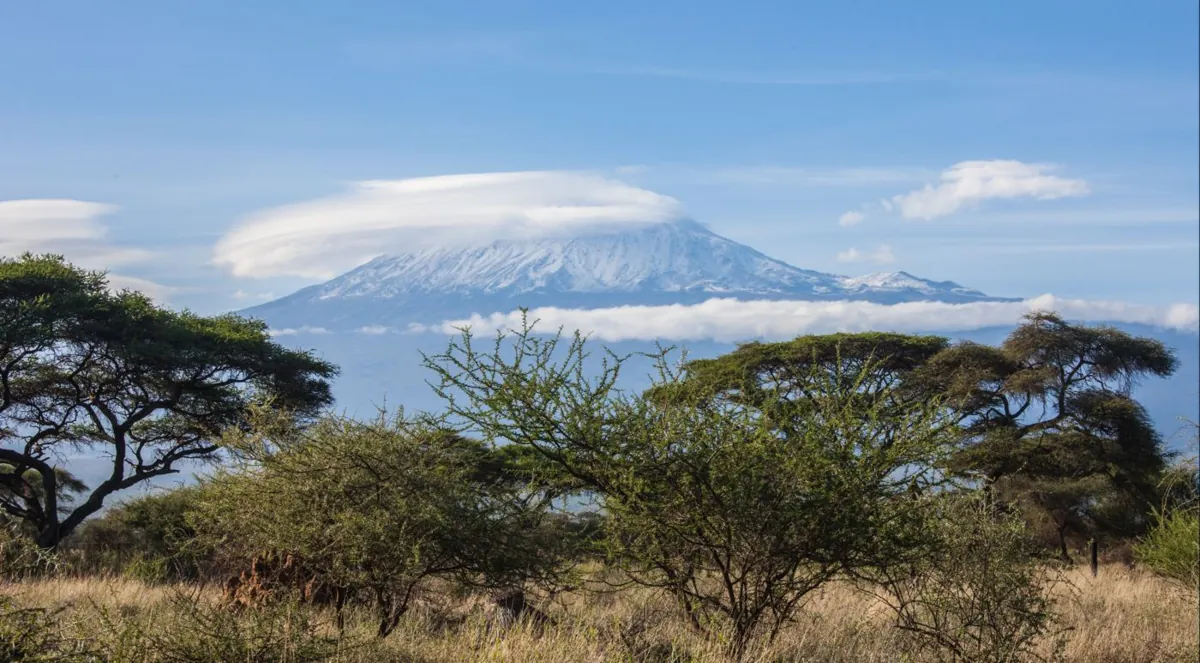
Photo: Ninara, CC BY 2.0, via Wikimedia Commons (resized).
How the short dry season works
Kilimanjaro has two rainy seasons and two drier ones. The UIAA Medical Commission lists the non-rainy seasons as January through mid-March and June through mid-October, with the main rains from early April to mid-June and from mid-November through December (UIAA, Kilimanjaro guide). It also notes that January to March is the warmest time of the year, while June to August is the coldest.
Climate researchers who run weather stations high on the mountain describe the same pattern: “long rains” in March–May, “short rains” in October–December, a pronounced dry season from June to September, and a short and dry, yet more variable season in January and February (Mölg et al., Earth System Dynamics, 2020). In plain terms, January and February are usually dry, but a wet spell is more likely than in August.
If you’re comparing every month of the year, see our year-round seasons guide and best time to climb Kilimanjaro. This page only covers January and February.
January and February at a glance
| What to expect | January and February |
|---|---|
| Season | Short dry season, January to mid-March; January to March is the warmest time of year on the mountain (UIAA) |
| Rain pattern | Usually dry, but less predictable than the long June–September dry season (Mölg et al., 2020) |
| Near-summit temperature | Little change month to month; the measured average at 5,873 m was −7.0°C, day and night combined (Mölg et al., 2020) |
| Departures | Weekly Lemosho and Machame departures, including full-moon dates (2027 dates) |
Summit night: how cold, and what it changes in your kit
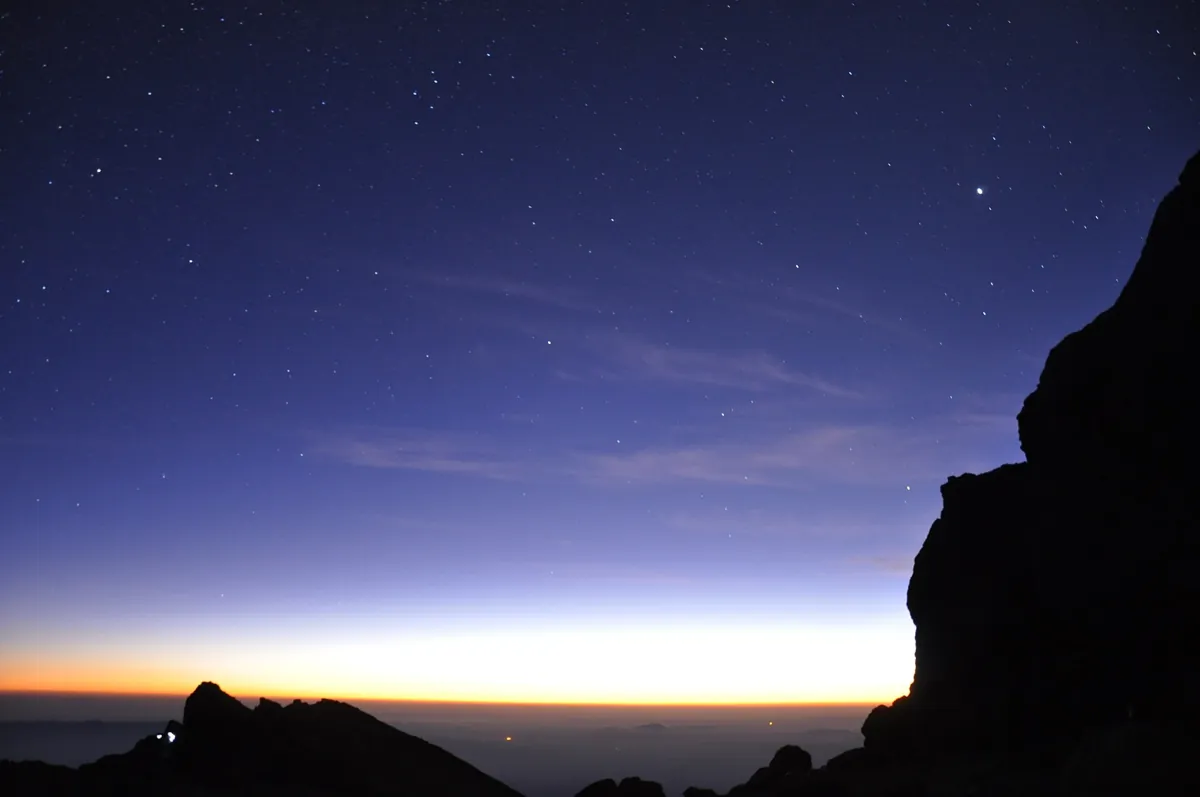
The measured mean air temperature at 5,873 m, just below Uhuru Peak, was −7.0°C over four years of data (Mölg et al., 2020). That figure averages day and night together. Summit night starts around midnight, so you’ll be walking through the coldest hours, and wind makes it feel colder still. The same study found that monthly means near the summit hardly change through the year, so “warmest season” mostly means warmer days lower down, not a warm summit.
The UIAA’s kit advice holds for January and February: set off on summit night wearing your warmest layers and take them off if you get too hot, keep a small water bottle inside your jacket so it doesn’t freeze, and carry chemical hand warmers if you usually get cold hands (UIAA). For a full list, see our Kilimanjaro packing essentials and how cold Kilimanjaro gets.
Holiday dates and route choice
If you’re thinking of a holiday climb that runs into January, see climbing over Christmas and New Year.
Climb Kili runs two routes, the 8-day Lemosho and the 7-day Machame. Both join the same corridor before descending via Mweka. Groups are capped at 6 climbers, so a busy campsite doesn’t change how closely your guides can watch you (FAQ).
Summit success: days matter more than the month
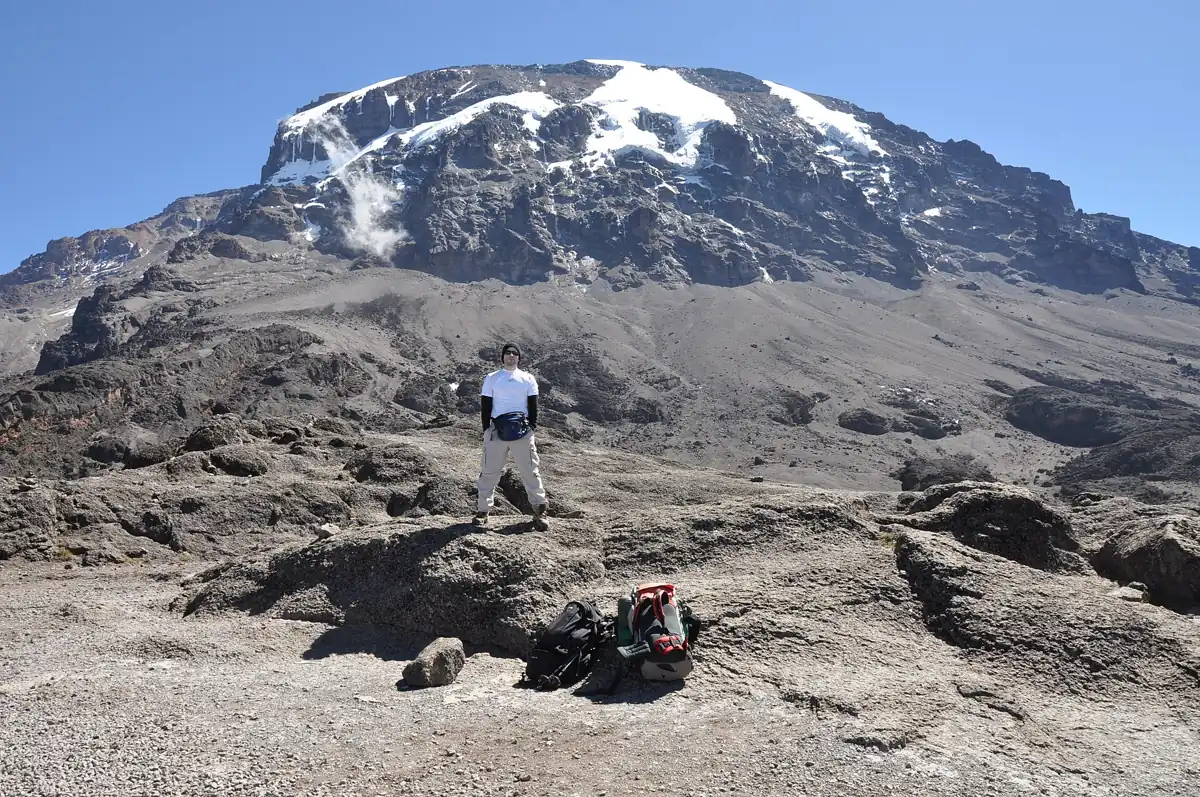
We found no peer-reviewed study comparing summit success by calendar month on Kilimanjaro. What the research does show is that ascent rate drives altitude illness. A two-year review at Kilimanjaro Christian Medical Centre (KCMC) in Moshi summarised published summit rates of 53–61% for 4- to 5-day climbs and 88% for a 6-day climb, with acute mountain sickness falling from 75–77% to 53% (Dekker et al., Wilderness & Environmental Medicine, 2021). The CDC’s travel-medicine guidance says the same thing in general terms: avoid going “too high too fast” (CDC Yellow Book 2026).
That’s why our shortest climb is 7 days and why we recommend the 8-day Lemosho for first-time climbers. Climb Kili’s own summit success rate is 98.8% across routes (FAQ). More on this in our acclimatization guide.
What to pack for January and February
- Your full summit-night system: insulated jacket, warm gloves with liners, warm hat, and a sleeping bag rated for the cold (the UIAA suggests −20°C) (UIAA).
- A lightweight waterproof jacket and trousers for showers in the forest zone, which the UIAA says is the wettest part of the mountain (1,800–2,800 m).
- Sun protection: hat, sunglasses and sunscreen. Days lower down can be hot.
Use our packing essentials as your checklist. The full gear list arrives in your Welcome Portal as soon as you book.
Questions specific to January and February
For general questions about routes, gear, insurance and safety, see our main Kilimanjaro FAQ.
Is February warmer than January at the summit?
Not in any way you would notice. Weather stations on Kersten Glacier near the summit recorded monthly mean air temperatures that barely change through the year; the average at 5,873 m was −7.0°C (Mölg et al., 2020). Pack the same summit-night layers for either month.
Can it rain or snow in January or February?
Yes, it can. January and February are a short dry season, but researchers describe it as “more variable” than the long June–September dry season (Mölg et al., 2020). The UIAA notes that rain showers are common below the clouds, so a waterproof jacket and trousers stay in your daypack (UIAA).
Are there full-moon summit dates in January and February?
Yes. Our 2027 dates page lists full-moon departures on both the 8-day Lemosho and 7-day Machame routes in January and February, along with Solo Trekkers and Women’s groups.
Climbing in January or February 2027?
Departures run every week on the Lemosho and Machame routes, including full-moon summit dates.
See 2027 departuresReserve your spotPlan from your country: United States Canada United Kingdom Australia Germany
Sources
- UIAA Medical Commission, Kilimanjaro: A Guide. Seasons, kit advice. Accessed Nov 18, 2026.
- Mölg T. et al. (2020), Mesoscale atmospheric circulation controls of local meteorological elevation gradients on Kersten Glacier near Kilimanjaro summit. Earth System Dynamics 11, 653–672. Summit-area weather station data, Table 1 and Fig. 4. Open access (CC BY 4.0).
- Dekker M.C.J. et al. (2021), Altitude-Related Disorders on Mount Kilimanjaro, Tanzania: Two-Year Survey in a Local Referral Center. Wilderness & Environmental Medicine 32(1), 36–40. Summary of summit and AMS rates by itinerary length.
- CDC Yellow Book 2026, High-Altitude Travel and Altitude Illness. Acclimatization guidance.