Mountain facts
Does Kilimanjaro Have Snow? When and Where You'll See It
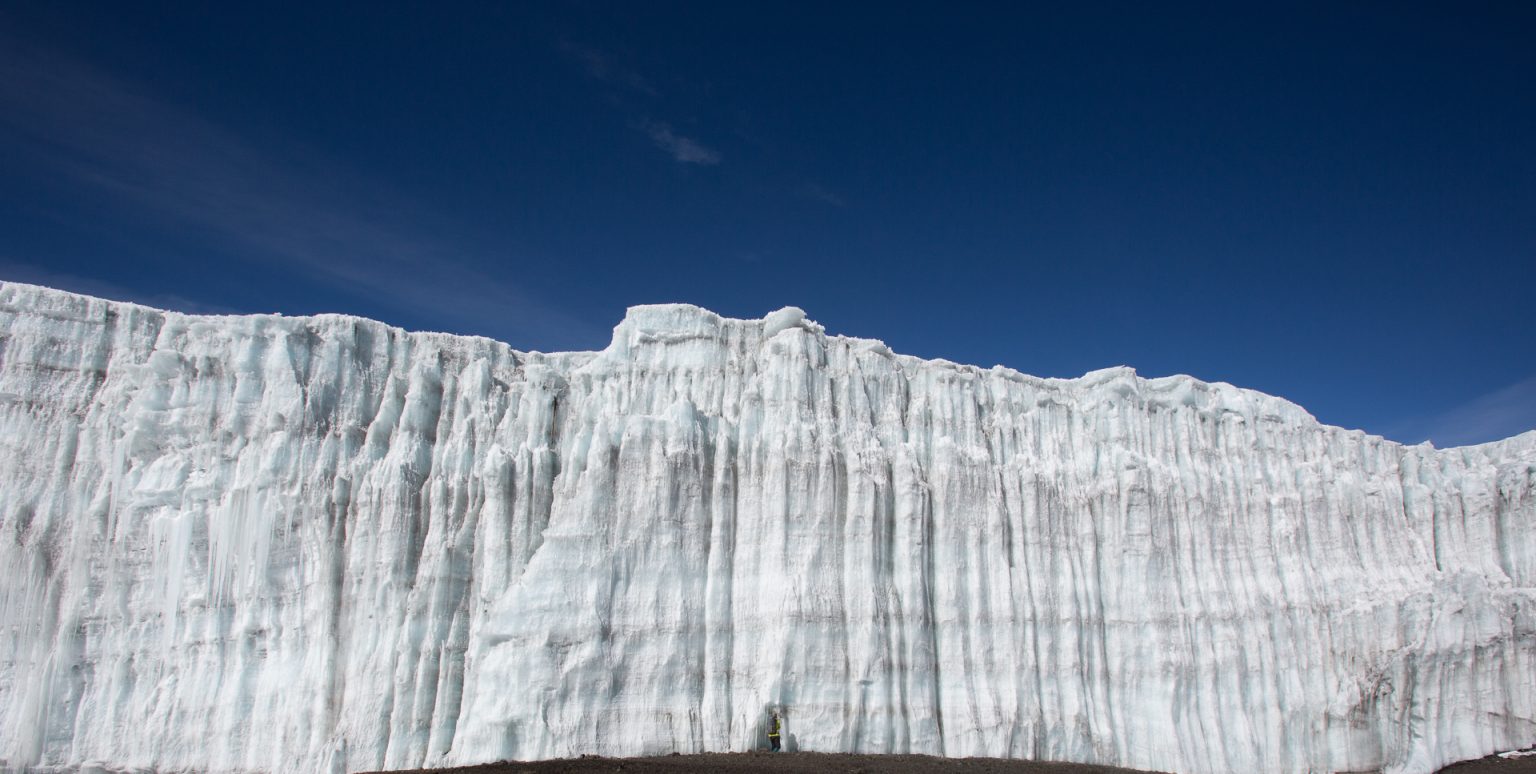
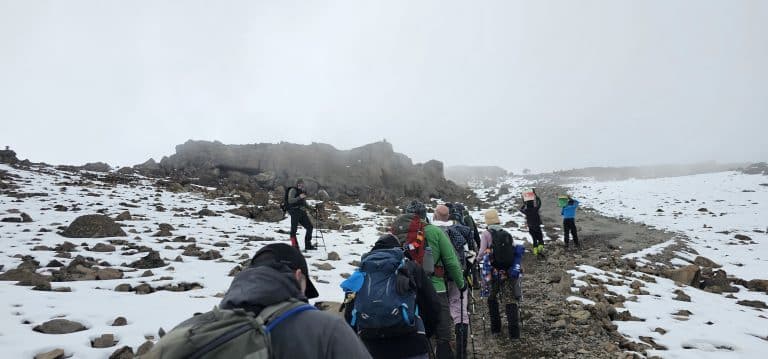
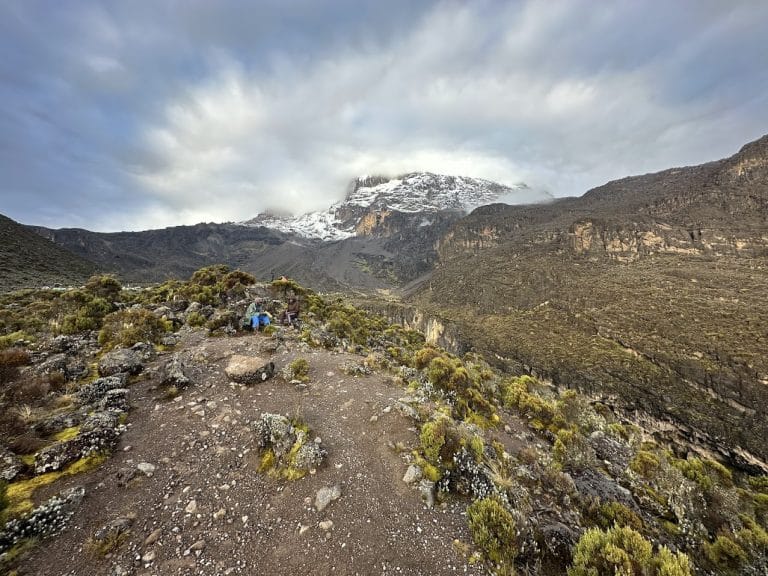
Yes. Kilimanjaro has snow and glacier ice all year round, on Kibo, its summit cone, even though it is close to the equator. TANAPA, the park authority, describes Kibo as covered by snow throughout the year.
The glaciers are shrinking fast, and fresh snow is most likely in the rainy months. Here is where you will see ice on our routes and what snow means for your climb. Kibo is the dormant summit cone: see Is Kilimanjaro a volcano?. You pass every climate zone on the way up: see Kilimanjaro's climate zones. For the human story of the mountain, see Kilimanjaro history.
- 6Small groups of 6 climbers, max
- ✓Locally owned and operated in Tanzania
- ▲Higher Kosovo summit camp for a better summit chance
- ★Authentic Africa, from summit to safari
Most Recommended Locally Owned Company on TripAdvisor · 1,600+ verified reviews · Summiting Kilimanjaro since 1984
The science
Why does Kilimanjaro have snow if it is near the equator?
It is all about height. Uhuru Peak stands at 5,895 m, and the higher you go, the colder it gets. A 2015 study in PLOS One puts the average yearly temperature at the summit at about −7°C, cold enough for ice to last all year.
Of Kilimanjaro's three volcanic cones, only Kibo keeps a permanent ice cap. Mawenzi has some ice patches and seasonal snow, and Shira has none (Britannica). Learn more in Is Kilimanjaro a volcano?.
On the climb
Where will you see snow and ice on our routes?
- From the Shira Plateau: on the 8-Day Lemosho, the plateau opens up with your first views of Kibo's snowy peaks.
- On the southern circuit: both routes offer some of the best views of the southern ice fields and glaciers.
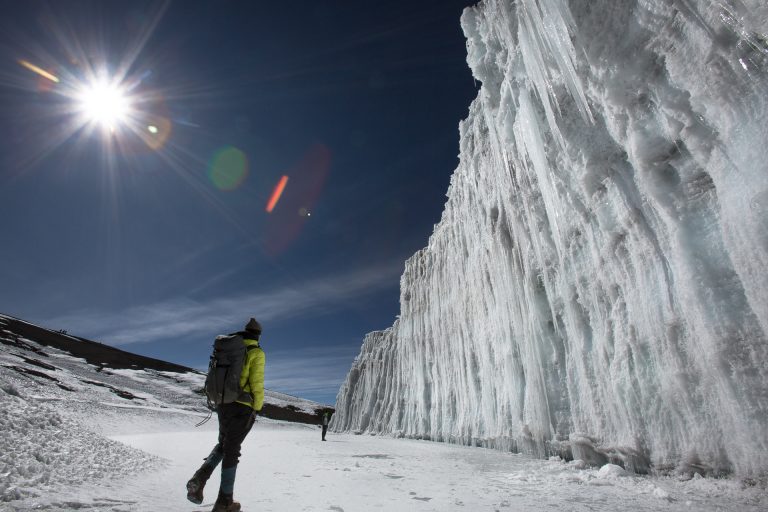
- On summit night: above Stella Point (5,750 m) you walk along the crater rim toward Uhuru Peak, with glaciers beside the path.
Route details are from our 7-Day Machame itinerary and 8-Day Lemosho itinerary. Read more on the summit in Uhuru Peak.
Seasons
When does it snow on Kilimanjaro?
Snow can fall near the summit in any month, but it is most likely in the wetter seasons. Our best time to climb guide describes November and December as the short rains, with mixed days, rain lower down and snow near the summit. April and May are the long rains and the wettest months in our rainfall table.
Average rainfall at the start of the climb (inches), from the monthly table on our FAQs page. The upper mountain is colder and can differ.
In the dry months (January and February, and June to October) the summit ice is still there, but fresh snowfall is less likely. Compare months in our month-by-month seasons guide.
Climate
Are Kilimanjaro's glaciers disappearing?
Yes. Scientists estimate that Kilimanjaro has lost more than 80% of its glacier ice in the past century, and UNESCO lists the glaciers as especially vulnerable to climate change. The ice cliffs you see today are what remains of a much larger ice cap.
We run a refillable water system with no plastic bottles and follow Leave No Trace on every climb. Read our Kilimanjaro glaciers guide.
Gear
Do you need special snow gear to climb Kilimanjaro?
No technical snow skills are needed on our routes. Kilimanjaro is a trek, not a technical climb. What you do need is warmth and grip:
- Waterproof, broken-in hiking boots and gaiters
- Warm layers, a down jacket, warm gloves and a hat for summit night
- Microspikes, which help in icy conditions and can be rented from us
- Sunglasses, because sun on snow is strong at altitude
See our packing essentials and how cold Kilimanjaro gets.
Have a question this page doesn't answer? Our Kilimanjaro FAQs cover booking, gear, safety, visas and more, or ask us directly.
Tiffany Watson · Operations Director
See Kilimanjaro's glaciers before they're gone
Both of our routes pass the southern ice fields and finish on the snowy crater rim at Uhuru Peak. Ask us about dates.
Or call 1-888-589-1884 · Email us
Where this comes from: Snow and ice: TANAPA park brochure (2024); Encyclopaedia Britannica; PLOS One (2015) study of Kilimanjaro's vegetation zones; UNESCO World Heritage Centre. Glacier loss and water system: our Kilimanjaro facts guide and Kilimanjaro glaciers guide. Seasons: our best time to climb guide and the rainfall table on our FAQs. Route views: our 7-Day Machame itinerary and 8-Day Lemosho itinerary. Microspike rental: our FAQs.